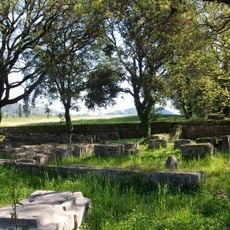
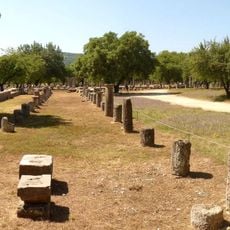
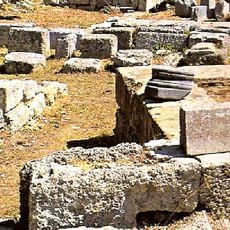
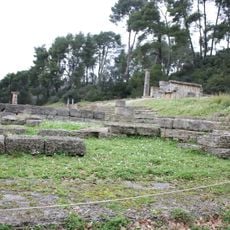
Kronion Hill, Summit near Ancient Olympia, Greece
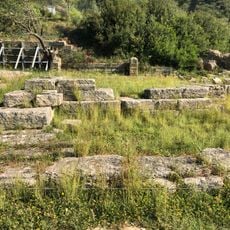
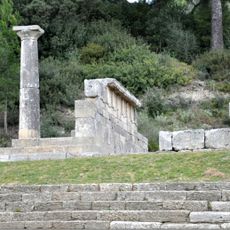
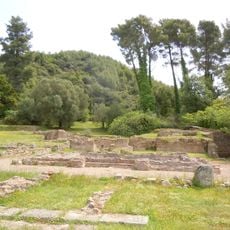
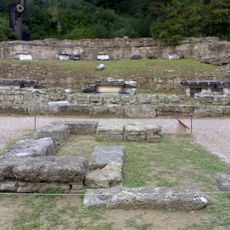
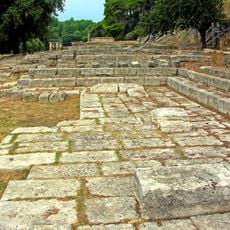
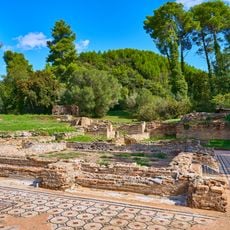
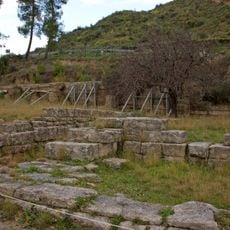
Kronion Hill is a low hill north of the sanctuary of Ancient Olympia, rising 113.9 metres today; it was 122.6 metres in 1880. It is made of river sediments without solid rock, and its southwest spur, the Gaion, held Olympia's oldest sanctuaries, dedicated to Gaia and Themis.
The hill formed geologically in the Pleistocene, about 800,000 to 1,600,000 years ago, from river sediments without solid rock. In Greek mythology Heracles named it after the god Cronus, to whom priests sacrificed on the summit; cults of other deities and nymphs are also recorded there. At its southwestern spur, the Gaion, stood Olympia's oldest sanctuaries, dedicated to Gaia and Themis. Fires, including under Ibrahim in the 1821 revolution and again in 2007, destroyed its vegetation and caused erosion: the height fell from 122.6 m in 1880 to 113.9 m today.
Greek myth credits Heracles with naming the hill for the god Cronus, to whom priests sacrificed on the summit. Cults of other deities and of nymphs are also attested there. At its south-western spur, the Gaion, stood Olympia's oldest sanctuaries, those of Gaia and Themis.
The summit is reachable via walking paths that start from the main archaeological area and are relatively easy to navigate. The best time to visit is early morning or late afternoon when lighting is better and the site is less crowded.
The hill's height has shrunk through erosion: it measured 122.6 metres in 1880 but only 113.9 metres today, after fires such as those set by Ibrahim's forces during the 1821 revolution and again in 2007 stripped its vegetation. Geologically it is a pile of river sediments from the Pleistocene, roughly 800,000 to 1.6 million years old, with no solid rock.
The community of curious travelers
AroundUs brings together thousands of curated places, local tips, and hidden gems, enriched daily by 93,182 contributors worldwide.