Library of Pantainus, Ancient Roman library in Plaka, Athens, Greece
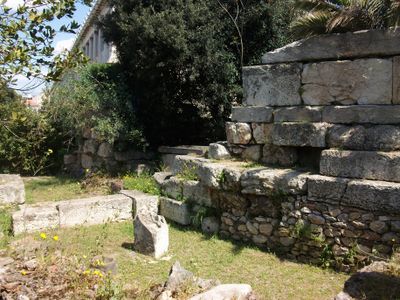
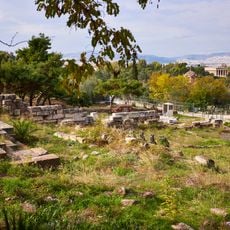
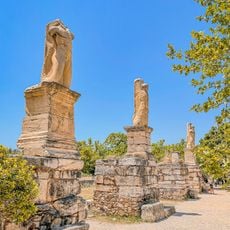
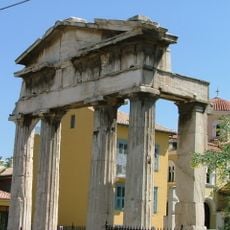
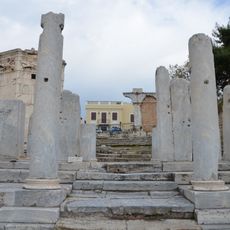
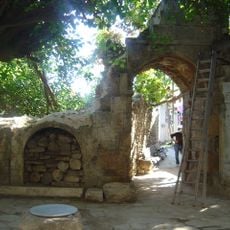
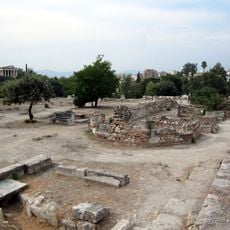
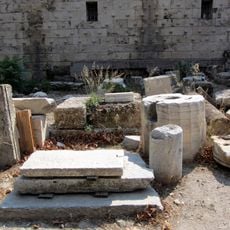
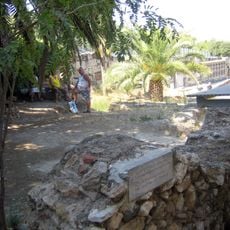
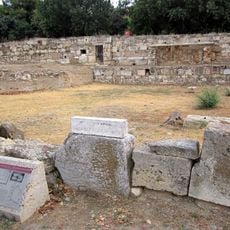
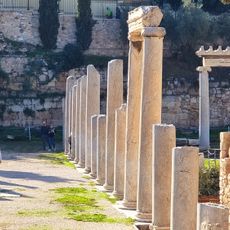
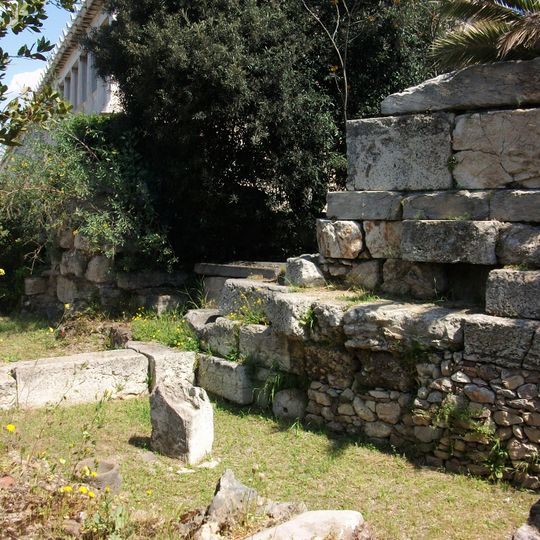
The Library of Pantainos stands in ruins at the southeast corner of the Agora, its large rectangular blocks of light gray and off-white stone partly covered by a later Roman wall and a tower. A wall of stacked blocks rises in stepped courses on the right, while flat stone slabs and broken steps extend left and below. The building had an unusual plan: a courtyard of 20 by 13.5 m paved with small irregular marble tiles, and a square reading room open to the east with marble floor and walls.
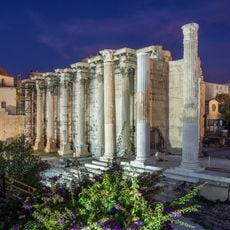
Titus Flavius Pantainos, an Athenian philosopher, built the library between 98 and 102 AD under Trajan, dedicating it to Athena Archegetis, the emperor and the people of Athens, as the lintel inscription records. The Herulian raid of 267 AD destroyed it and it was never rebuilt; in the 5th century its remains were absorbed into a large peristyle.
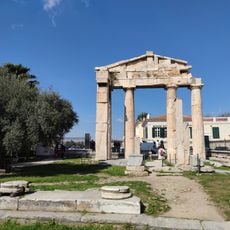
The library's Greek scrolls were kept for reference only: an inscription found in the Agora forbids lending them out and sets opening hours from the first to the sixth hour, roughly dawn to midday. The lintel inscription names Athena Archegetis, Trajan and the people of Athens as dedicatees.
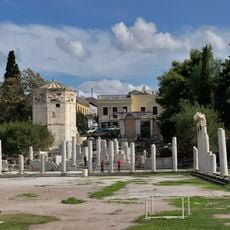
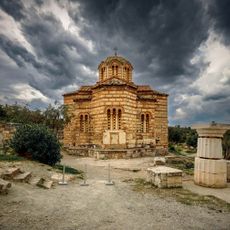
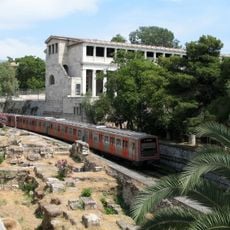
The remains can be seen during a visit to the Agora site in central Athens, located near the Stoa of Attalus. The site is easily accessible on foot and sits within the main archaeological zone of the historic area.
Rules for visitors were carved into an inscription at the doorway, showing that scrolls could only be handled under strict conditions. These protective measures were unusual for ancient libraries and reveal early efforts to safeguard written works.
The community of curious travelers
AroundUs brings together thousands of curated places, local tips, and hidden gems, enriched daily by 94,051 contributors worldwide.