Mont Gerbier de Jonc, Volcanic mountain peak in Ardèche, France
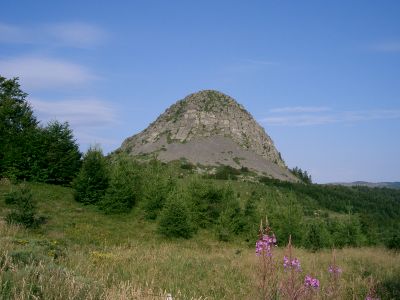
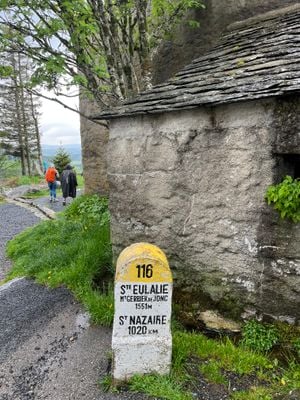
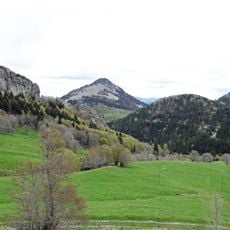
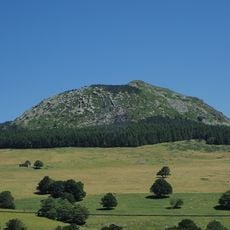
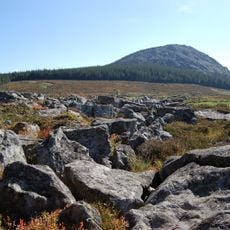
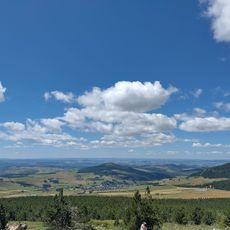
Mont Gerbier de Jonc is a phonolite lava dome in the Ardèche, rising to 1,551 metres. Its upper part is split into roughly prismatic columns of grey and pale brown rock, with green plants growing between them. Grey scree and scattered conifers cover the lower slopes.
The mountain formed through volcanic activity approximately 8 million years ago when thick lava created a dome within an ancient volcano's crater. Over time, erosion wore away the surrounding landscape, leaving this harder phonolite rock standing as a prominent landmark in the region.
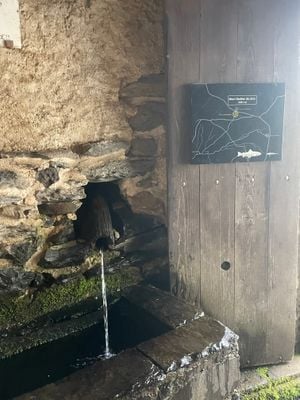
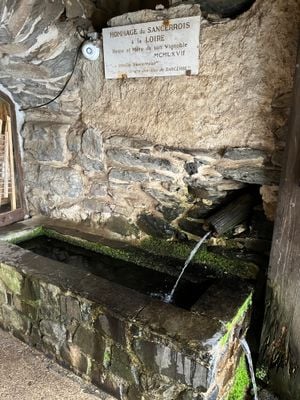
The name Gerbier de Jonc is misleading: it comes from a pre-Celtic root, Gar for "rock" and Jugum for "mountain", not from the French words for haystack or rush. Each Easter Monday the site hosts a meal celebrating fin gras du Mézenc, a beef with a protected designation of origin. In early June the Cercle des trois sources brings together representatives of villages where other great European rivers, such as the Danube, rise.
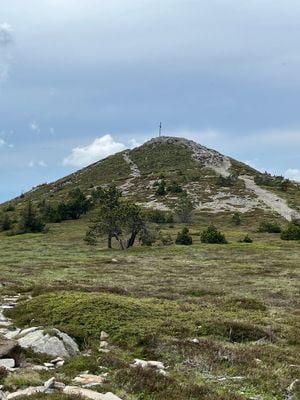
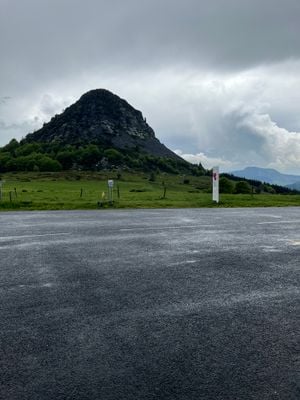
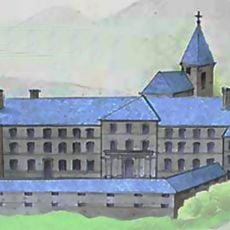
The free ascent takes about half an hour, so the summit is reached quickly from the car park at the foot of the dome. The upper section crosses stacked phonolite columns and loose scree, so wear sturdy shoes. The site also has a maison du site, opened in June 2017 in the former Touring club de France chalet-hôtel, with information panels and videos.
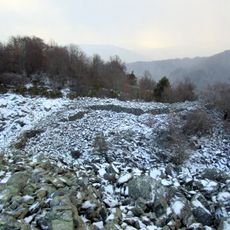
The phonolite contains visible sanidine crystals and a few augite needles, which geologists use to identify the rock. Periglacial erosion during the Quaternary broke up the upper dome, and the fallen blocks now form the scree that wraps around the base of the peak.
The community of curious travelers
AroundUs brings together thousands of curated places, local tips, and hidden gems, enriched daily by 93,780 contributors worldwide.