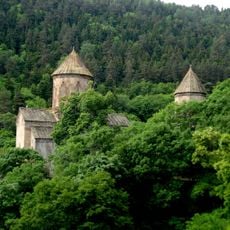
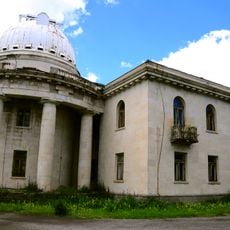
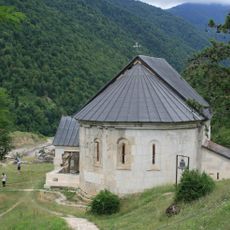
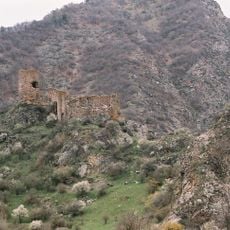
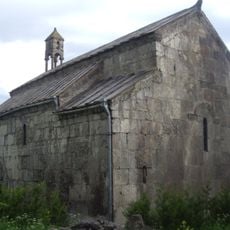
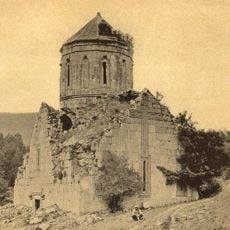
Chulevi Monastery, Medieval Orthodox monastery in Samtskhe-Javakheti, Georgia.
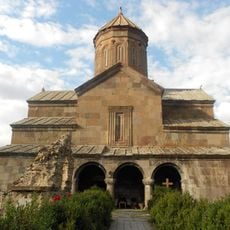
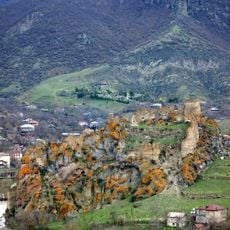
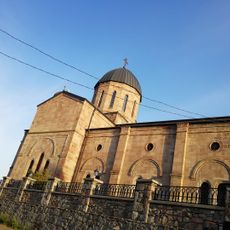
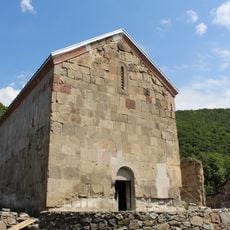
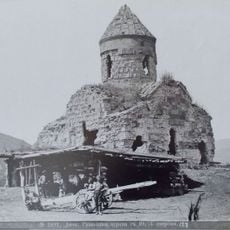
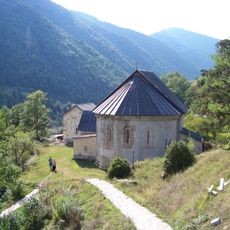
Chulevi Monastery of St. George is a 14th-century domed church on the left bank of the Kvabliani River near Adigeni. Its elongated rectangular plan has no projections, and the dome rests on the altar walls and two cross-shaped pillars. The tholobate has twelve windows, half of them false, and the interior was frescoed by Arsen in 1381.
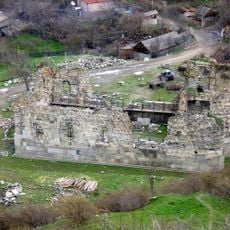
The monastery was built in the 14th century and declined during Ottoman rule. By 1595 it had been completely abandoned as the local Christian community faced pressure to conceal their religious objects.
An asomtavruli inscription names Arsen as the painter of the interior frescoes in 1381. On the south wall above the entrance, a group portrait shows the Jaqeli princes Sargis-Saba, Beka I, Sargis II, Qvarqvare I and Beka's younger son Shalva, patrons also depicted at Sapara and Zarzma.
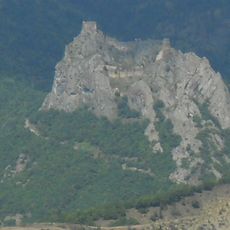
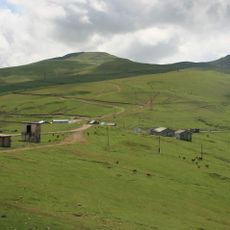
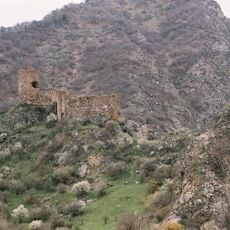
The site is accessible via hiking trails that also connect to nearby fortresses such as Zanavi and Okro. The best time to visit is during dry weather and with appropriate footwear for walking the paths.
The bells and other church items were buried in the adjacent wood by locals who were still Christian; they were found by accident in the 1980s, given to the Akhaltsikhe local museum, and handed over to the monastery only after its return to the Georgian Orthodox Church in October 1999.
The community of curious travelers
AroundUs brings together thousands of curated places, local tips, and hidden gems, enriched daily by 94,354 contributors worldwide.