Jakismani Monastery, Medieval monastery in Samtskhe–Javakheti, Georgia.
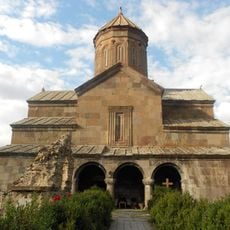
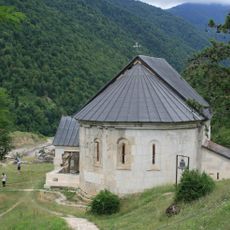
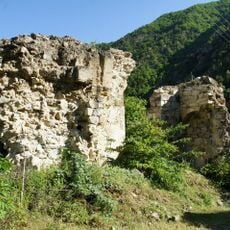
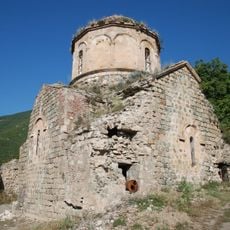
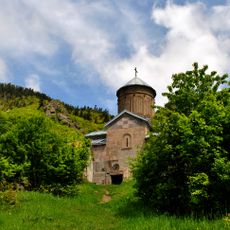
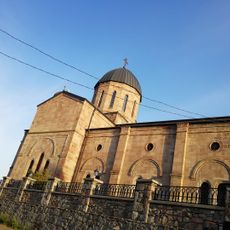
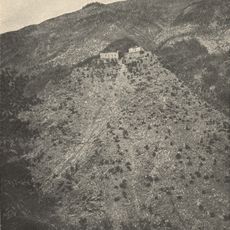
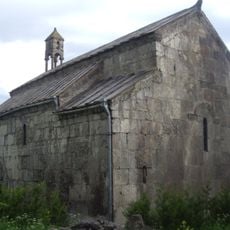
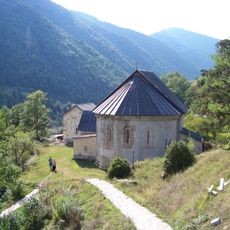
Jakismani Monastery is a hall church of the 9th or 10th century, named after the Resurrection, with two small chapels attached on the north side and the remains of a narthex to the west. The buildings stand on an artificially levelled terrace on a slope above the Potskhovi valley, on the site of an old abandoned village. Its finely cut stone facing, inside and out, and the forms of its arches, pilasters and capitals link it to the architecture of Javakheti and Tao-Klarjeti.
The hall church is dated to the 9th or 10th century, with masonry and carved stonework compared to the churches of Javakheti and Tao-Klarjeti. The complex grew on a levelled terrace of an old abandoned village above the Potskhovi valley. Monks repopulated the monastery in 2010, and in 2006 it was listed among Georgia's Immovable Cultural Monuments of National Significance.
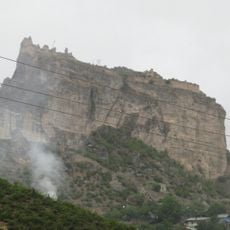
The monastery's main church is named after the Resurrection, not Saint Saba. Its name Jakismani derives from the Georgian toponym Jakisubani, meaning "a district of Jaki", after the Jakeli family whose castle stands nearby in the Potskhovi valley. Monks repopulated the monastery in 2010.
Access to the site requires crossing a border checkpoint between Georgia and Turkey, followed by travel along an unpaved road. Visitors should be prepared for rough terrain and check local conditions in advance.
The monastery's name is a corruption of the Georgian toponym Jakisubani, "a district of Jaki", after the Jakeli family whose castle ruins stand nearby in the Potskhovi valley. Monks repopulated the site in 2010, and eight novices now live there with their abbot.
The community of curious travelers
AroundUs brings together thousands of curated places, local tips, and hidden gems, enriched daily by 94,362 contributors worldwide.