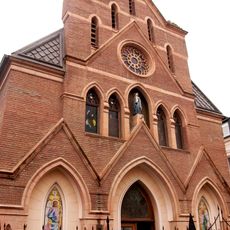
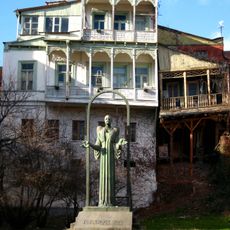
Atashgah of Tbilisi, Zoroastrian fire temple in Old Tbilisi, Georgia
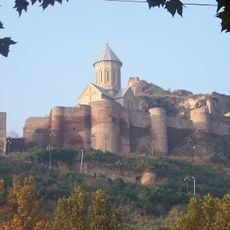
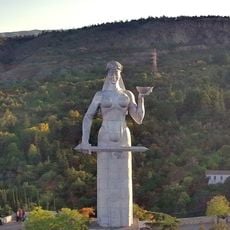
The Atashgah is a brick building with a curved perspex roof, standing 100 meters east of the Holy Mother Church of Bethlehem. The modest shrine sits on slopes northeast of the Mother Georgia statue with plain walls and simple interior details.
The building was constructed during the Sassanid Empire between 224 and 651 CE, when the region was under Persian rule. The structure ranks among Tbilisi's oldest religious buildings and survived multiple religious transitions across centuries.
The name Atashgah comes from Persian atash (fire) and gah (place). Traditionally only fruit-tree wood was burned here, chosen for its pleasant scent. In the 1720s the building served as a mosque, and by the 19th century it was used as a warehouse and then as housing.
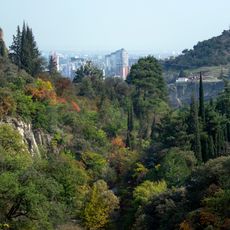
The temple sits on sloping ground in the eastern part of the old city and is accessible on foot. Visitors should wear sturdy shoes since the paths around the site are steep and uneven.
The building survived largely because it was discreetly camouflaged among the houses of Kldisubani; access is through a courtyard off Gomi Lane, reached by brick steps cut into the rock. In the 2007–2009 ICOMOS-led rehabilitation of the Bethlehem quarter it was cleared inside, partly excavated and given a temporary roof.
The community of curious travelers
AroundUs brings together thousands of curated places, local tips, and hidden gems, enriched daily by 94,328 contributors worldwide.