Lower Bethlehemi Church, Armenian monastery in Old Tbilisi, Georgia
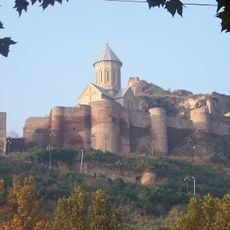
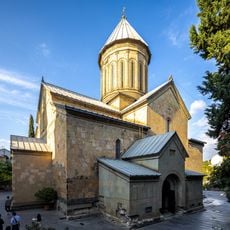
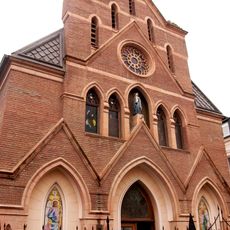
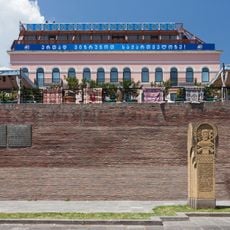
The Lower Bethlehemi Church is an Armenian monastery located at the base of Narikala Fortress in Tbilisi. The building displays typical features of Armenian religious architecture with stone walls and forms that reflect different construction periods spanning several centuries.
Melik-Ashkharhbek, son of a Persian-born Armenian settler, planned the monastery but died in battle with the Turks in 1724; his son Melik-aga completed the first chapel in 1727 with two nuns from New Julfa. The church was rebuilt between 1868 and 1870, and in 1988 it passed to the Georgian Orthodox Church. From 1989 to 1995 its Armenian iconography, inscriptions and the tomb of Mother-Superior Peprone were removed or destroyed.
The church was Armenian until 1988, when it passed to the Georgian Orthodox Church; from 1989 to 1995 its Armenian iconography was removed or destroyed and replaced with Georgian frescoes. A Georgian-style painting was placed on the altered northern entrance in June 1995. The building is now known as Kvemo Betlemi (Lower Bethlehem).
Reach the church by the stairway and ascent of Bethlehem Street (Betlemi) leading up from Asatiani Street, at the foot of Narikala Fortress in Old Tbilisi. The interior was painted in 1991–1997 by artists D. Khidasheli and M. Chakvetadze, so look up at the walls rather than only the altar. The building sits on a slope, and the entrance level differs from the street below.
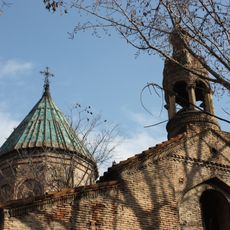
The walls show construction marks from different centuries, with visible changes in stone work and building techniques as you look closely. These layers tell how the building was rebuilt and enlarged over time as needs changed.
The community of curious travelers
AroundUs brings together thousands of curated places, local tips, and hidden gems, enriched daily by 94,089 contributors worldwide.