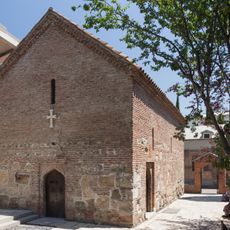
Лазні царя Ростома, 17th-century public bath complex in Old Town, Tbilisi, Georgia.
King Rostom's Baths is a 17th-century bathhouse in Old Town Tbilisi with chambers topped by domed roofs. Natural light enters through openings in the domes, and underground springs keep the water warm year-round.
King Rostom of Kartli (r. 1633–1658) and Kakheti (1648–1656) moved the royal residence from Metekhi to the right bank of the Kura and built this bath as part of his palace. A 1782 map shows the bath separately from the palace complex; after Agha Mohammad Khan's 1795 sack of Tbilisi only the bath survived. In 1804 the Assay Chamber moved in, and in 1832 its old vaults collapsed in heavy rain.
The building is also called Zarafkhana, the mint, because from 1804 to 1834 it housed Tbilisi's mint and struck silver and copper coins of three denominations bearing Georgian inscriptions. Small excavations in the 1950s found metal melting crucibles and coin dies here.
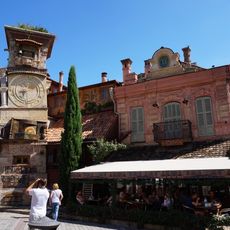
The building stands in the Old Town on the right bank of the Kura, near the Sioni Cathedral area where Tbilisi's mint once operated. Its roof served as the courtyard of house No. 3 on Erekle II Square until 1948, so the structure is easy to miss from street level. Archaeological work began here in 1958.
In the 1950s, small excavations inside the building turned up metal smelting crucibles and coin dies. From 1804 to 1834 the former bath housed Tbilisi's mint, which struck silver and copper coins in three denominations bearing Georgian inscriptions.
The community of curious travelers
AroundUs brings together thousands of curated places, local tips, and hidden gems, enriched daily by 93,159 contributors worldwide.