National Botanical Garden of Georgia, Botanical garden in Sololaki district, Tbilisi, Georgia.
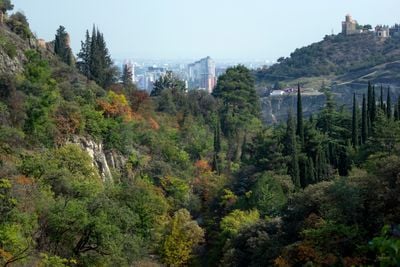
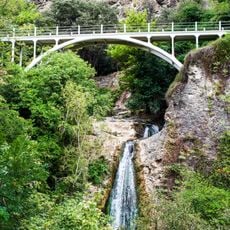
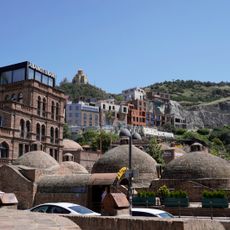
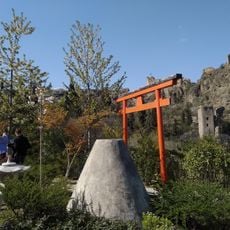
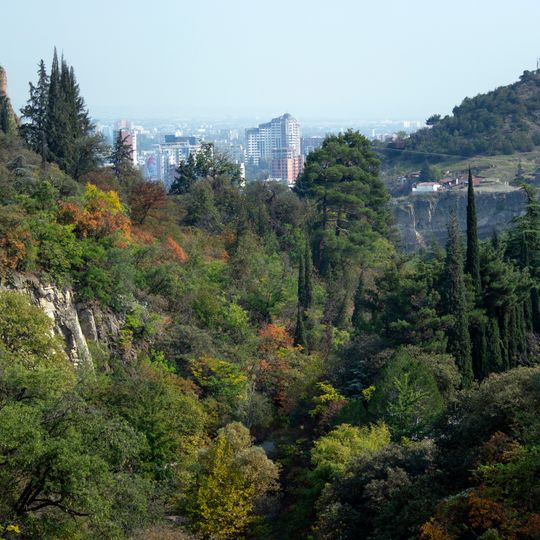
The National Botanical Garden of Georgia occupies the Tsavkisistskali River gorge on the southern slope of the Sololaki Range, between 417 and 714 metres above sea level. Its 96 hectares are planted by phytogeographic zone: Caucasus endemics, Mediterranean evergreens, Colchic and East Asian trees, plus a rose garden and a lilac collection. Three bridges cross the river, among them a 1914 arched bridge above a large waterfall.
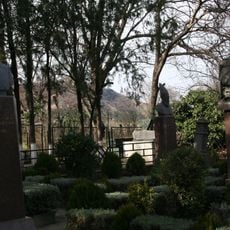
The garden's predecessor was a royal garden of decorative and medicinal plants in the lower Tsavkisistskali valley, documented from the early 17th century. In 1845 it received botanical garden status under the Russian administration. It expanded west between 1896 and 1904, and from 1932 to 1958 the former Muslim cemetery on the right bank was added, where the grave of writer Mirza Fatali Akhundov remains.
The garden displays Georgian native plants alongside specimens from distant regions and serves as a space for research and protecting rare species. Visitors can see how traditional Georgian flora connects with modern conservation methods.
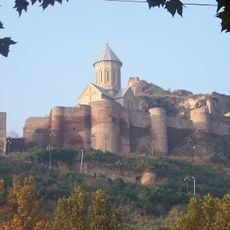
The main entrance sits on Botanical Street near Narikala Fortress, where visitors can start exploring. The grounds are easy to walk through, with a cafe and museum on site plus seating areas throughout for taking breaks.
Since 1876 the garden has published a collection of its scientific papers. It also takes part in the Millennium Seed Bank project, and a regional seed bank for Caucasian plants was set up within its grounds. The former Muslim cemetery added in the 1930s still holds graves, among them that of the Azerbaijani writer Mirza Fatali Akhundov.
The community of curious travelers
AroundUs brings together thousands of curated places, local tips, and hidden gems, enriched daily by 93,173 contributors worldwide.