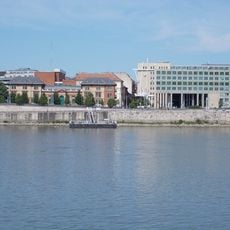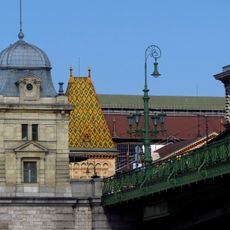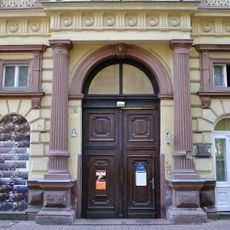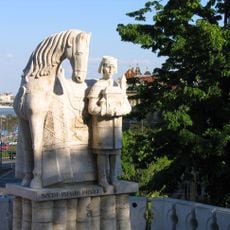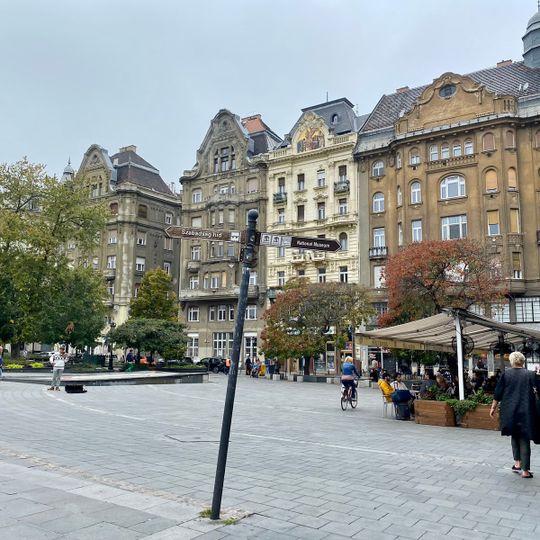
Fővám tér, square in Budapest, Hungary
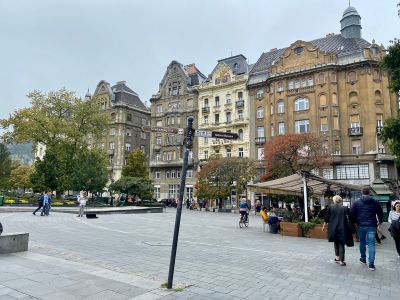
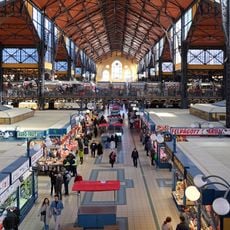
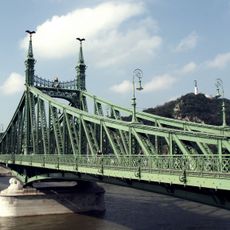
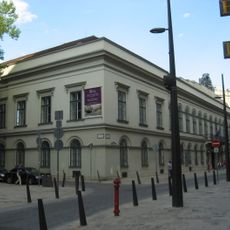
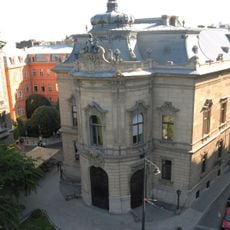
Fővám tér is a large square on the border of Budapest's 5th and 9th districts, at the Pest bridgehead of the Liberty Bridge. It stretches from the Danube to the Váci utca–Pipa utca line, with house numbers 1–6 in District V and the rest in District IX. The two-storey neorenaissance Fővámház, designed by Miklós Ybl, now houses Corvinus University; the Central Market Hall faces it.
The square was called Salzplatz in 1817, Sóház tér in the 1850s and Só tér from 1866, after the salt office and warehouse that stood between Só utca and today's square. Miklós Ybl designed the two-storey Customs Palace, built 1870–1874 in neo-Renaissance style; the square was named after it when the building opened. It was Dimitrov tér from 1949 to 1991, and the bronze statue of Georgi Dimitrov by Jordan Kracsmarov, made in 1954, was moved to the Budatétény Statue Park in 1992.
The square works as a meeting point between university students, market shoppers, and people heading across the bridge to Gellért Hill. Locals often use the flat space near the tram stop as a quick rendezvous before continuing on foot along the river or into the market building, where food stalls and produce sellers keep the area busy through most of the day.
The square is easy to walk across in a few minutes, and its open layout makes it simple to spot the tram stop, the bridge entrance, and the market hall from almost anywhere you stand. Early morning or late afternoon are good times to be there, when the commuter flow is lighter and the riverside path feels easier to enjoy.
Beneath the paving, the square hides the first underground tram stop built in Budapest, completed in 1951 and still in use under a different modern layout. Few people walking above realize that the current flat surface was rebuilt in 2007-2009 as part of the metro line 4 works and the restoration of Liberty Bridge.
The community of curious travelers
AroundUs brings together thousands of curated places, local tips, and hidden gems, enriched daily by 94,668 contributors worldwide.