Liberty Bridge, Cantilever bridge in Budapest, Hungary
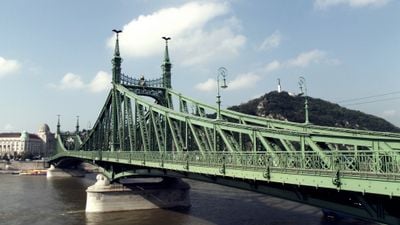
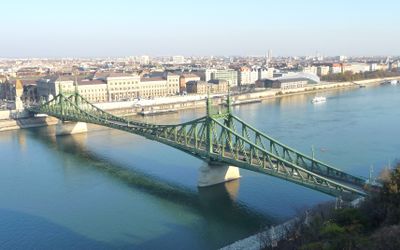
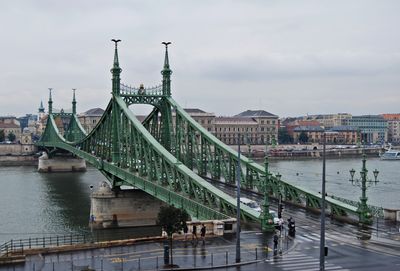
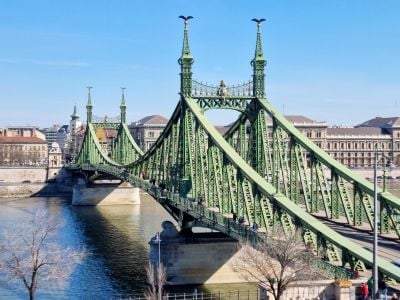
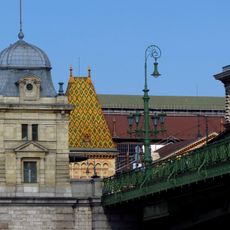
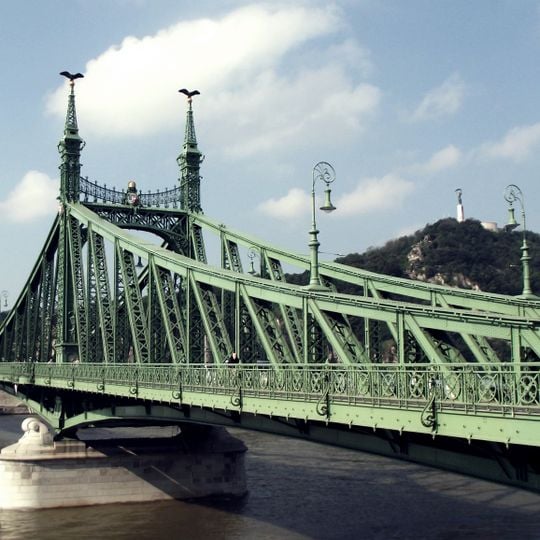
The Liberty Bridge is a green-painted steel bridge in Budapest, Hungary, that spans the Danube River with a total length of 333 meters and a width of 20 meters. The structure connects Buda on the western bank with Pest on the eastern bank, carrying tram lines and vehicle lanes across the water.
The bridge opened in 1896 for the millennial celebration of Hungary and received its original name in honor of Emperor Franz Joseph. After destruction during World War II, it was rebuilt and renamed Liberty Bridge in 1946.
The pillars carry turul sculptures, mythological birds from Hungarian folklore that remain national symbols today. The original silver rivet hammered by Emperor Franz Joseph is still visible at the Pest bridgehead, recalling the ceremonial opening.
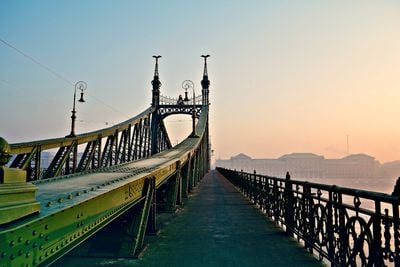
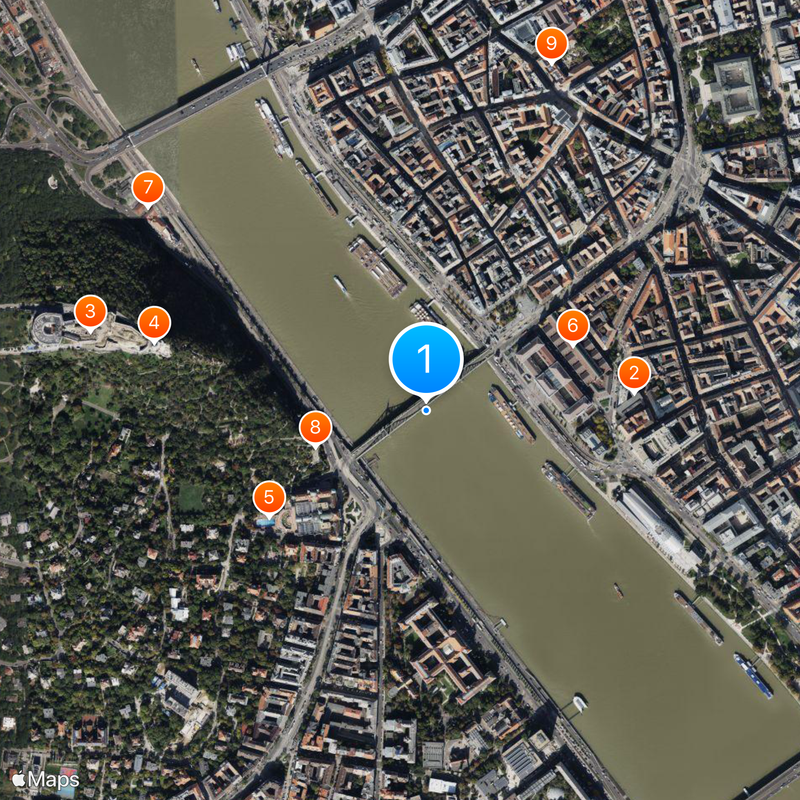
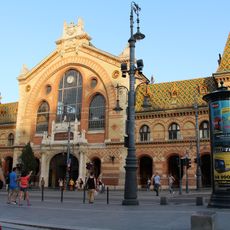
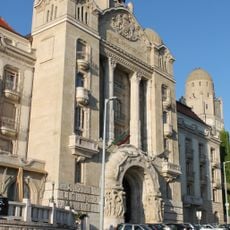
Tram lines 47, 48, and 49 cross the bridge daily, linking Fővám Square with its Central Market Hall on the Pest side to Szent Gellért Square near Gellért Thermal Bath on the Buda side. Pedestrians can use sidewalks on both sides of the roadway to cross the Danube, enjoying open views of the river.
The bridge remains structurally stable even without its central 49-meter section, demonstrating the engineering mastery of architect János Feketeházy's cantilever design. This construction method allowed the bridge to be quickly rebuilt after the war by replacing damaged sections individually.
The community of curious travelers
AroundUs brings together thousands of curated places, local tips, and hidden gems, enriched daily by 60,000 contributors worldwide.