Glencree German War Cemetery, War cemetery in Glencree, Ireland
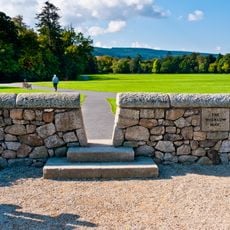
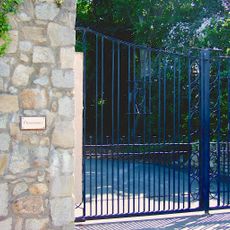
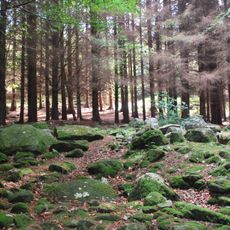
Glencree German War Cemetery lies in a disused stone quarry in the Glencree valley, County Wicklow, 16 km south of Dublin. A natural stone wall and wrought-iron gate lead to a mourning hall decorated with mosaics by Munich painter Beck and to the grave field, where 134 dead rest, each pair sharing a name plaque. A triangular granite stele bears a memorial verse by Stan O'Brien, and a tall Celtic high cross overlooks the site.
The cemetery was established in 1961 to honor German military personnel who died during World War II, including Luftwaffe and Kriegsmarine service members. It emerged from the need to provide a dignified burial place for soldiers who perished on Irish soil.
A triangular granite stele at the entrance to the graves carries a memorial verse by Stan O'Brien in English, Irish and German. The mourning hall is clad in natural stone, and its ceiling and inner walls are decorated with mosaics designed by the Munich painter Beck. On Volkstrauertag, the German war graves day, the Royal British Legion lays wreaths here.
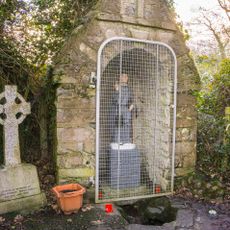
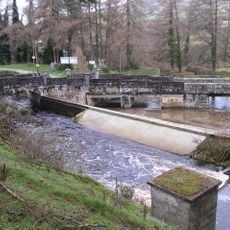
The site lies in a disused stone quarry about 16 km south of Dublin, reached through an iron gate off the road; a German-language sign marks the entrance. A path leads past the mourning hall to the grave field, where pairs of names share one ground-level plaque. A narrow riverside path beside the cemetery leads to a Mass rock on the bank of the Glencree River.
The 46 Arandora Star victims buried here were German civilian internees being deported from Britain to Canada when the liner was torpedoed by U-47 off Tory Island, County Donegal, in July 1940. The sinking was not accidental: the submarine attacked a ship it took for a legitimate target.
The community of curious travelers
AroundUs brings together thousands of curated places, local tips, and hidden gems, enriched daily by 92,905 contributors worldwide.