Seefin Passage Tomb, Passage grave at Seefin Hill, Blessington, Ireland.
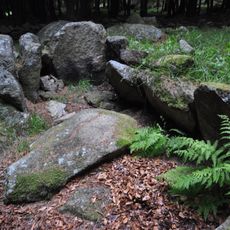
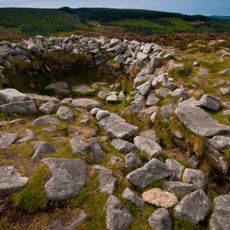
Seefin Passage Tomb is a stone cairn 24 m across and 3 m high on the summit of Seefin in the Wicklow Mountains. Large kerb stones ring its base, and a narrow passage about 7 m long opens into a chamber with five recesses. Two entrance stones bear concentric diamond carvings, and lozenge motifs, cut lines and quartz appear in the chamber.
Built around 3300 BC in the Neolithic, the tomb was excavated in 1931 by R. A. Stewart Macalister, who cleared stones blocking the entrance passage. No artefacts or human remains were found, so either no one was buried here or the remains were later removed. The German source also records re-excavation in the 1990s.
The name comes from Irish 'Suí Fínn', meaning Fionn's seat, linking this place to the legendary figure Fionn MacCumhaill in Irish mythology. This connection shows how ancient sites remain woven into local storytelling and cultural memory.
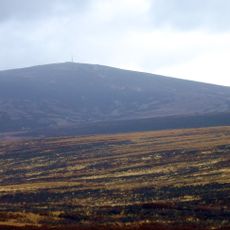
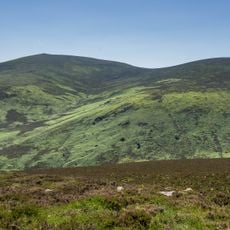
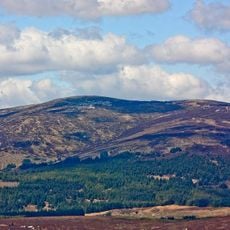
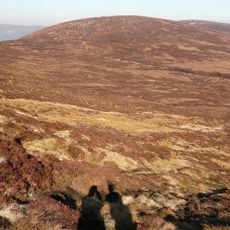
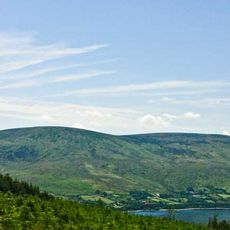
The summit stands at 621 m above sea level near the northern boundary of Wicklow Mountains National Park, just south of Kilbride Army Camp. The cairn is open and exposed, with no facilities or shelter, so walkers should carry water and wear boots suited to boggy, uneven ground. The chamber roof is partly collapsed and the passage is narrow, so entry requires care.
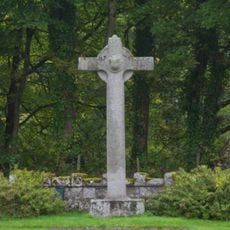
An Early Christian equal-armed cross was carved into one of the roof stones, showing the tomb remained accessible long after its original Neolithic purpose. This Christian marking reveals how pagan sites were repurposed and reinterpreted in later centuries.
The community of curious travelers
AroundUs brings together thousands of curated places, local tips, and hidden gems, enriched daily by 94,040 contributors worldwide.