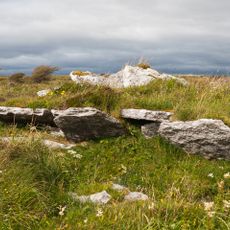
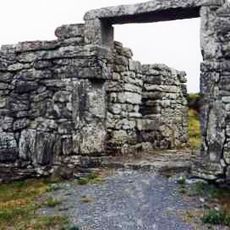
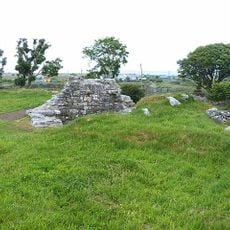
Pollnagollum, Cave system in County Clare, Ireland
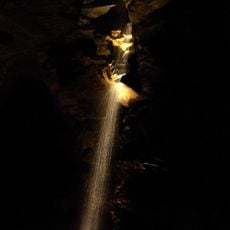
Pollnagollum is an active stream passage cave in County Clare, over 16 kilometres long and the longest cave on the island of Ireland. It is entered at the Pollnagollum entrance, with the main streamway a short distance inside, and near its southern end lies the 30-metre Poulelva pot, often used for through-trips.
Initial documented exploration took place in 1880 when T. J. Westropp first entered the cave and reached the Main Junction. This early investigation established the foundation for modern understanding of the cave's internal layout.
The Irish name is Poll na gColm, "the hole of the doves", from colm, a dove; the cave is also called Pollnagollum–Poulelva after its two entrances. Cavers have used it for over a century, and it is often chosen as a beginners' trip, with through-trips between the Pollnagollum entrance and the Poulelva pot.
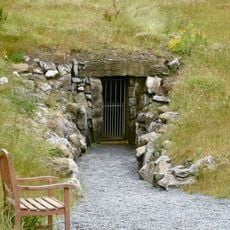
Access is through the Pollnagollum entrance, with the main streamway a short distance inside; through-trips exit via the 30-metre Poulelva pot. The cave is popular with cavers and often done as a beginners' trip, but the stream passages are winding and wet, so cavers need lights and appropriate gear. The far terminus is a low bedding plane that becomes too tight to pass.
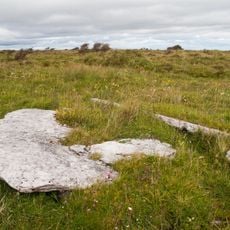
The cave's terminus is a low bedding plane that eventually becomes too tight to pass. Its water resurges at the Killaney rising south of the cave. Much of the water enters from the sinks of Upper Pollnagollum, where surface streams run off shale bedrock and sink into permeable limestone.
The community of curious travelers
AroundUs brings together thousands of curated places, local tips, and hidden gems, enriched daily by 93,741 contributors worldwide.