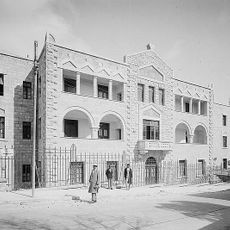
St. Stephen's Basilica, Jerusalem, Catholic basilica in Jerusalem, Israel
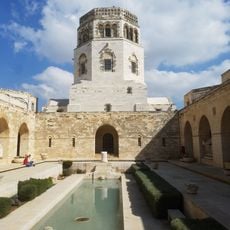
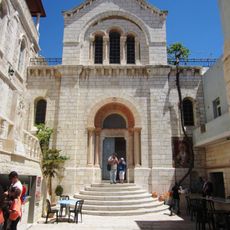
St. Stephen's Basilica is a church in Jerusalem located near the Damascus Gate outside the old city walls, featuring a simple yet solid architectural style. The complex includes the main church with white walls, a peaceful courtyard, and adjacent buildings belonging to a French school of biblical archaeology.
The site's history begins in 439 when Empress Eudocia built a chapel to honor Saint Stephen, whose relics were discovered in a nearby cave. The location suffered destruction during Persian invasions in 614 and later conflicts during the Crusades, before French monks led by Comte de Piellat rebuilt the current basilica starting in 1882 and dedicated it in 1900.
The name Saint-Étienne, or St. Stephen, recalls the deacon stoned on this spot according to an old tradition; a rival site lies in the Kidron Valley. The church keeps the memory of the first martyr, and the French Dominicans who built it in 1900 made it the chapel of their École biblique. A statue in the atrium shows Stephen kneeling at his stoning.
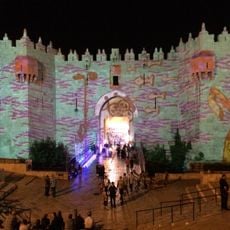
The basilica stands on Nablus Road just outside the Old City walls, a short walk north of Damascus Gate. It is the convent church of the Dominican École biblique et archéologique française, founded in 1890, so visits are made through the school grounds. The atrium covers a large Byzantine cistern still holding water; a mosaic in the right aisle floor lies under carpets that can be lifted.
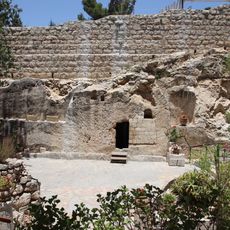
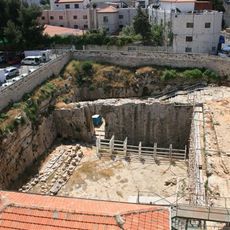
In 1885, preparing the ground for the new convent, workers uncovered two Iron Age II rock-cut burial caves. Cave 1 covers about 78 m² and held 23 burials; cave 2 covers about 94 m² and held 28. Their ashlar chambers and Assyrian-style elements date them to the late 8th century BCE, and some scholars once took them for the tombs of the later kings of Judah.
The community of curious travelers
AroundUs brings together thousands of curated places, local tips, and hidden gems, enriched daily by 93,559 contributors worldwide.