Merot, Archaeological site in Upper Galilee, Israel
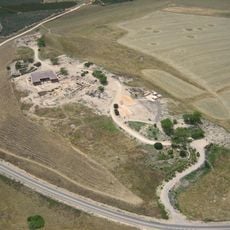
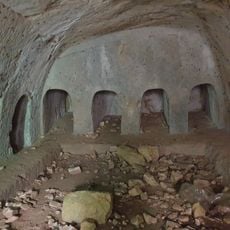
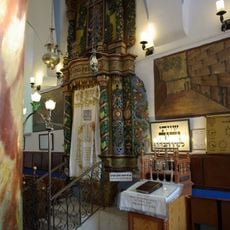
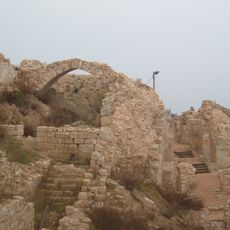
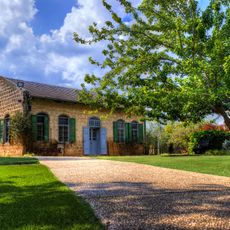
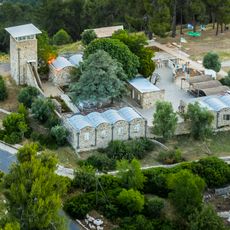
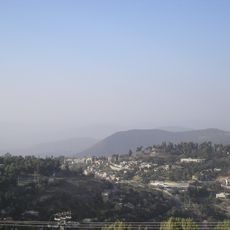
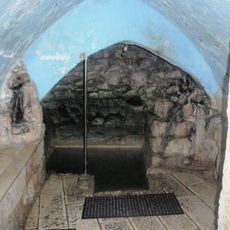
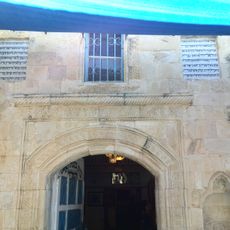
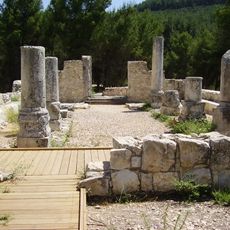
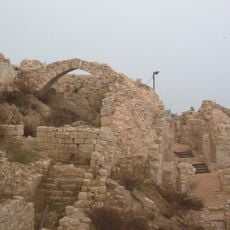
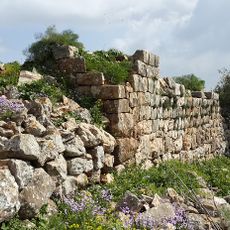
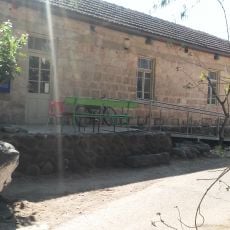
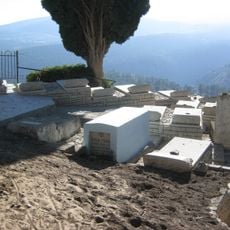
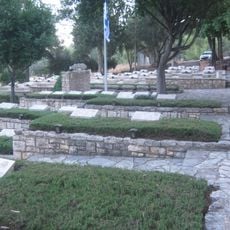
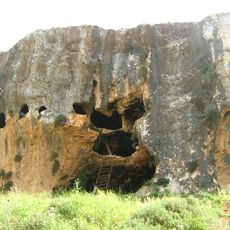
Merot is a ruined Jewish settlement on a slope about 4 km west of Tel Hazor, in the Upper Galilee. Its remains include a synagogue begun in the 4th century and completed in the 7th, a study hall with stone benches, a ritual bath, fortifications with a rock-cut ditch, hiding systems, water installations, winepresses and burial fields. The synagogue's mosaic floor, the earliest found in a Galilean synagogue, is shown as a reconstruction made in 1989 by students of the Ort Hatzor-Haglilit school.
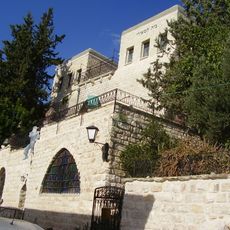
Merot is identified with Meroth, a Jewish settlement on the northern border of Galilee that Josephus says he fortified late in the Second Temple period before the Great Revolt. A 14th-century Cairo Geniza document records the name as Kfar Marus, which appears in Ottoman tax lists of 1596; Victor Guérin found it ruined in 1875, and it was resettled under the British Mandate until its destruction in 1948. Coins from Alexander Yannai and a hoard of 485 Byzantine-era coins, with three later exceptions, indicate continuous occupation into the early Ottoman period.
A 14th-century document from the Cairo Geniza records a pilgrim's journey among the tombs of the righteous that names the site "Kfar Marus", and the tomb of a righteous man there, possibly Rabbi Hanah, was venerated. The synagogue's mosaic shows a young warrior with sword, copper helmet and shield, read as David with Goliath's weapons, beside the inscription "Yudan bar Shimon Mani".
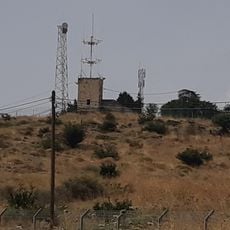
The site lies inside a military training area ("Area 100") and is open to visitors on Saturdays. Reach it by a dirt road branching off the Rosh Pina–Kiryat Shmona road south of Tel Hazor, or from Alma. No national park or antiquities authority has taken responsibility for its upkeep.
The synagogue's mosaic floor, the oldest found in a Galilean synagogue, depicts a young warrior with a sword, bronze helmet and shield, recalling David and the weapons taken from Goliath. It also carries the inscription "Yudan bar Shimon Mani", perhaps the donor or the craftsman. The original is not at the site; students of ORT Hatzor-HaGalilit made the replica there in 1989.
The community of curious travelers
AroundUs brings together thousands of curated places, local tips, and hidden gems, enriched daily by 93,240 contributors worldwide.