Safed, Medieval fortress in northern Galilee, Israel
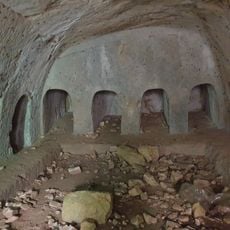
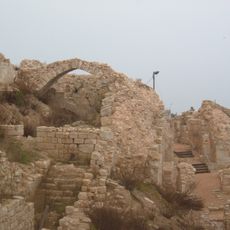
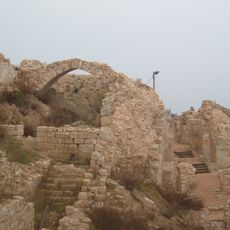
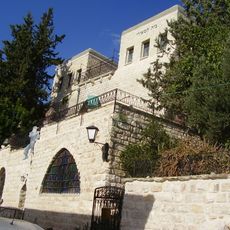
Safed Citadel is a medieval fortified complex positioned on a hilltop in northern Galilee. The site features thick stone walls, defensive towers, and underground passages scattered throughout the ruins.
The Franks built a first castle around 1101–1102, according to the historian Ibn Shabbâd al-Halabi; other scholars attribute it to Fulk of Anjou (1131–1143). King Amalric I handed it to the Templars in 1168, Saladin took it in November 1188, and the Ayyubid sultan al-Malik al-Mu'azzam Isa had it dismantled in 1220. Recovered in 1240, it was rebuilt in two and a half years under Bishop Benoît d'Alignan, then taken by Baybars on 22 July 1266 after a siege of about fifteen days.
The Hebrew name Tzfat and the Arabic Safad both refer to the hilltop. The Templars kept an octagonal chapel dedicated to Saint George in the lower part of the keep, and they escorted pilgrims heading to the Table of the Lord. A small agricultural market grew in the bourg below thanks to the castle's presence.
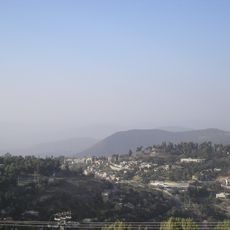
The ruins sit on a rocky spur about 850 m high, reached by climbing through the old town of Safed; the ground is uneven and partly overgrown. The site lies on the western shore of the Sea of Galilee, roughly a day's march from Acre. Little of the perimeter is legible today, so look for the excavated stretch of wall with external buttresses on the southern side.
The 13th-century Latin treatise De constructione castri Saphet records the garrison: 50 knight brothers, 30 sergeant brothers, 50 turcopoles and 300 crossbowmen, plus 820 craftsmen and 400 slaves, about 1,700 people in peacetime and 2,200 in war. The rebuilding of 1240–1243 cost 1,100,000 Saracen bezants, with 40,000 more each year to run it.
The community of curious travelers
AroundUs brings together thousands of curated places, local tips, and hidden gems, enriched daily by 92,789 contributors worldwide.