Ari Ashkenazi Synagogue, 16th-century Ashkenazi synagogue in Safed, Israel
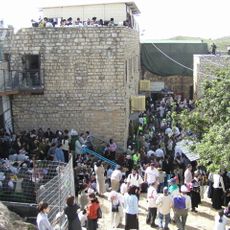
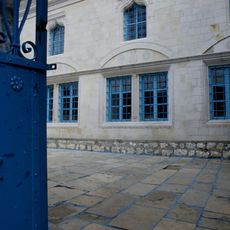
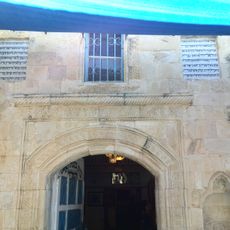
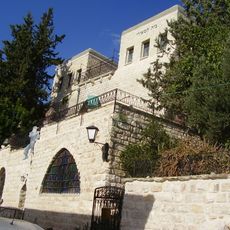
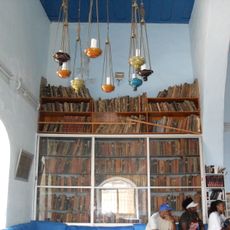
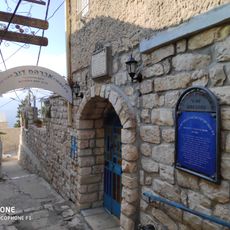
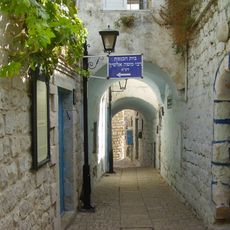
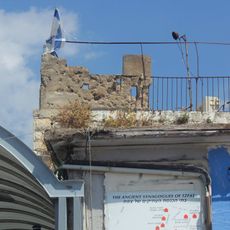
The Ari Ashkenazi Synagogue stands on Israel Najara Street in Safed's old Jewish quarter. Its Holy Ark, carved from olive wood by a craftsman from Galicia, rises high with colorful carvings of Jewish symbols, plants and animals, including a lion for the acronym Ari. A Hebrew inscription above the entrance reads "How awe-inspiring is this place, the synagogue of the Ari of blessed memory."
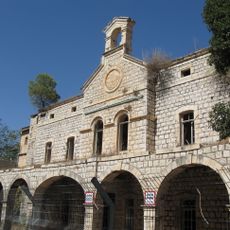
The synagogue was founded by Sephardic immigrants from Greece in the 16th century; a stone plaque gives 1578, six years after Luria's death, though it was placed after the 1937 renovation. The Galilee earthquake of 1837 destroyed it, and it was rebuilt by 1857, as a stone inscription on the facade records. During the 1948 Arab-Israeli War a bomb fell in the courtyard and shrapnel entered the packed synagogue, but no one was hurt.
The synagogue preserves prayer customs kept by its wardens, many influenced by Sephardic practice in Safed and by Luria's own mixed origin: the Torah scroll is raised before the reading, supplications are omitted on additional days including 5 Av, the anniversary of Luria's death, and Hallel on Rosh Chodesh is recited without a blessing.
The synagogue stands on Israel Najara Street in Safed's old Jewish quarter, a short walk from the Ari Sephardic Synagogue. It is an active Orthodox congregation, so men and women sit separately and visitors should dress modestly and keep quiet during prayers. Note that the building has no mezuzah on its door; a small inner room used for Torah study does have one.
In the courtyard stands a square column with a concave surface that was traditionally used to light fires during Lag Ba'Omer celebrations. This detail is rarely known today.
The community of curious travelers
AroundUs brings together thousands of curated places, local tips, and hidden gems, enriched daily by 93,365 contributors worldwide.