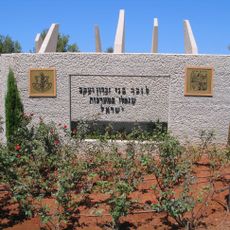
Ein Tzur, Natural spring in Haifa District, Israel.
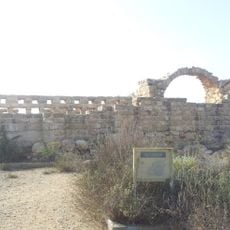
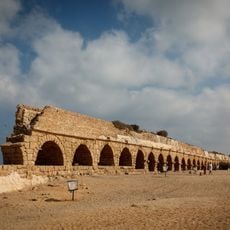
Ein Tzur is a spring in Ramat Hanadiv park, near Zikhron Ya'akov and Binyamina. Around it are a hewn tunnel, a 47-metre aqueduct and several storage pools from different periods, plus the remains of a small Roman bathhouse with changing room, cold, tepid and hot rooms, and underfloor heating.
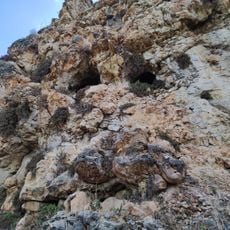
The spring was cut with rock-cut tunnels in antiquity to raise its yield, and a roughly 47-metre aqueduct led its water to a large Roman reservoir beside a small bathhouse. Its waters also fed regional systems carrying water to Caesarea in the Roman and Byzantine periods. The bathhouse, with apodyterium, frigidarium, tepidarium and caldarium, served the ancient settlement at nearby Horvat Elak.
In the Byzantine period the rock-cut tunnel was used as a ritual bathing pool; about 2,100 coins from the 4th–6th centuries CE were found on its floor, left by visitors seeking fertility. The Bordeaux Pilgrim already mentioned these traditions in 333 CE. After the rise of Islam in the 7th century the visits stopped and the custom was forgotten.
Ein Tzur is reached on a marked trail from the Ramat Hanadiv garden, or by a shorter route from the car park of the ORT Binyamina school, where the Israel Trail leads to the spring after about 500 metres. The spring itself is fenced off for safety and can only be viewed through a metal grate. The large Roman reservoir is usually dry.
In the Byzantine period the rock-cut tunnel was used as a ritual bathing pool: about 2,100 coins from the 4th to 6th centuries CE were found on its floor, left by visitors seeking fertility. The Bordeaux Pilgrim already mentioned the spring's wish-well reputation in 333 CE.
The community of curious travelers
AroundUs brings together thousands of curated places, local tips, and hidden gems, enriched daily by 92,641 contributors worldwide.