Latrun Abbey, Trappist monastery in Latrun, Israel
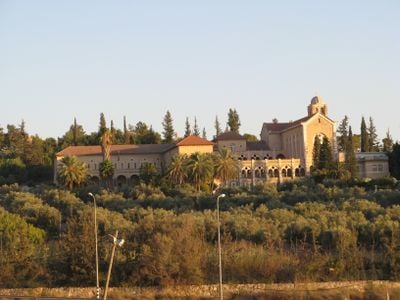
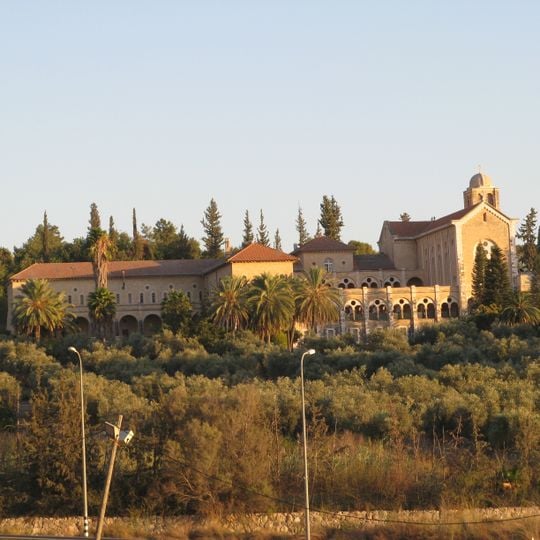
Latrun Abbey is a Trappist monastery founded in 1890 at Latrun, at the southeastern edge of the Ayalon Valley. Its pale tan stone complex, built from 1926 in a style the monks called Romanesque-Byzantine, has two-storey wings with red tiled roofs and ground-floor arcades. The tall church block has a gabled facade, a rose window and a small domed lantern, with a two-level arcade below and palm trees in front.
The abbey was founded on 31 October 1890 by 17 French Trappist monks, who received farmland from Carmelite nuns and planted olives, vines and grain. Expelled by the Ottoman Turks in World War I, the monks returned from 1919; expansion in a Romanesque-Byzantine style began in 1926 and building ended in 1960, with the church consecrated only in 1999.
The monastery reflects the daily life of Trappist monks who live and work in silence within its walls. Visitors can observe how this community maintains its spiritual routine and how the space serves as their home for prayer and labor.
The site is easy to reach and offers a straightforward path through the monastery grounds for visitors of all abilities. The monks sell local products like wine, honey, and olive oil at the entrance shop, along with books and mementos.
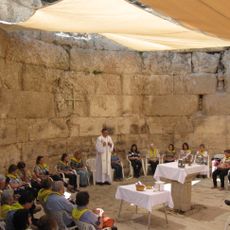
The courtyard holds an archaeological collection with decorated column fragments and ossuaries from different periods of regional history. These artifacts offer insight into the long settlement history of the site before the monastery was built.
The community of curious travelers
AroundUs brings together thousands of curated places, local tips, and hidden gems, enriched daily by 92,638 contributors worldwide.