Deccan Traps, Large igneous province in Maharashtra, India
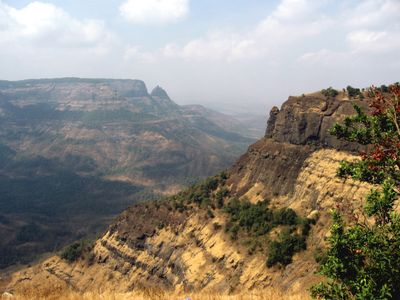
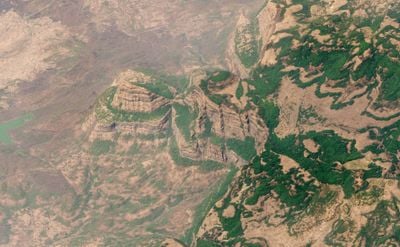
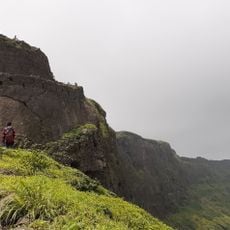
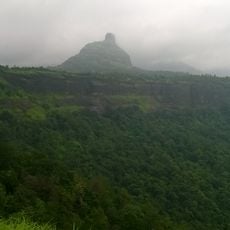
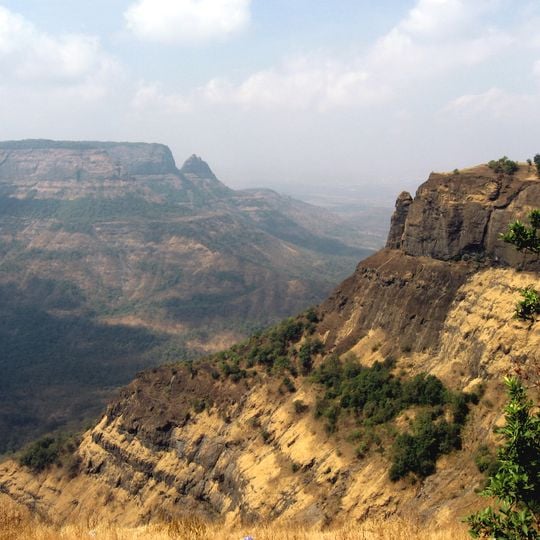
The Deccan Traps are a layered stack of solidified flood basalt covering about 500,000 square kilometres of west-central India, in places more than 2,000 metres thick. The flows cooled as near-horizontal sheets, so the rock weathers into stepped, terraced benches with banded vertical faces, as at the Western Ghats escarpment. The province is divided into the main Deccan, Malwa Plateau, Mandla Lobe and Saurashtran Plateau.
This formation occurred through volcanic eruptions between 66.3 and 65.6 million years ago, during the period when dinosaurs disappeared from Earth. The eruption lasted roughly one million years and changed global climate through the release of gases.
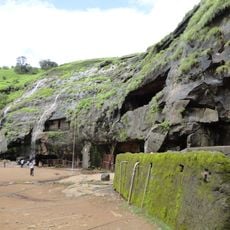
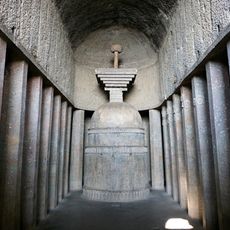
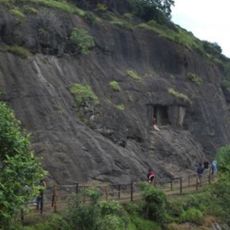
The name comes from the Swedish word trapp, for stairs, describing the stepped hills; Deccan derives from Sanskrit for "southern". The basalt layers also hold the Ajanta and Ellora caves, cut into the rock from around 200 BCE, with Buddhist, Hindu and Jain carvings.
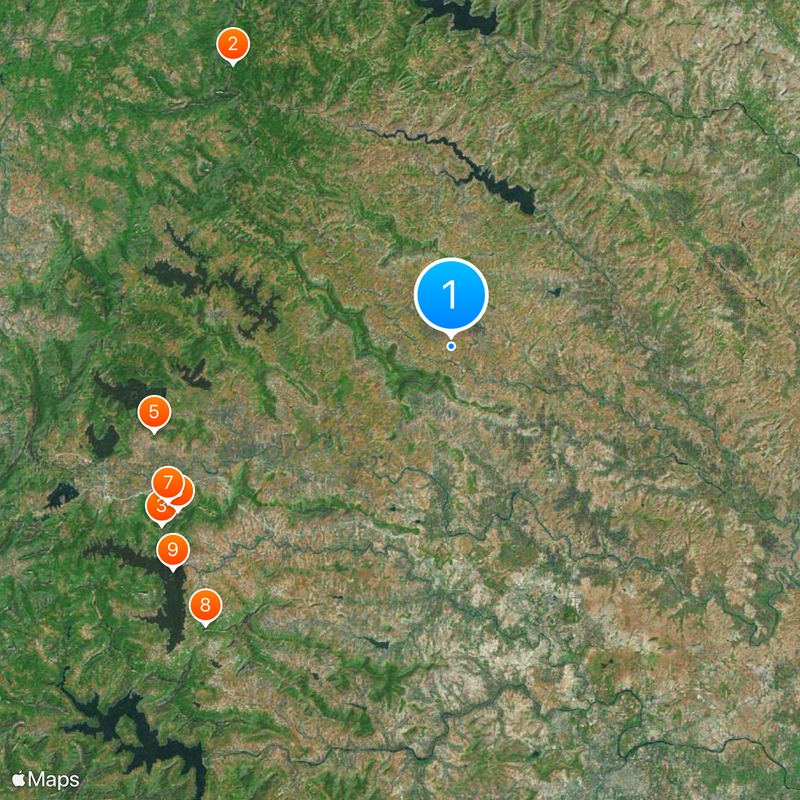
The stepped benches of the traps are best seen from the Western Ghats escarpment, where the lava pile is thickest and the flat-topped ridge lines stand above the plain. The dry months from November to May keep the rock faces free of monsoon cloud and the access tracks open. The four subprovinces — main Deccan, Malwa Plateau, Mandla Lobe and Saurashtran Plateau — lie in Maharashtra, Madhya Pradesh and Gujarat.
The term "trap" entered geology in 1785–1795 from the Swedish word trapp, meaning stairs, after the step-like hills of this region. The lava is linked to the Réunion hotspot, the same mantle plume that later built the Mascarene Islands in the Indian Ocean.
The community of curious travelers
AroundUs brings together thousands of curated places, local tips, and hidden gems, enriched daily by 92,312 contributors worldwide.