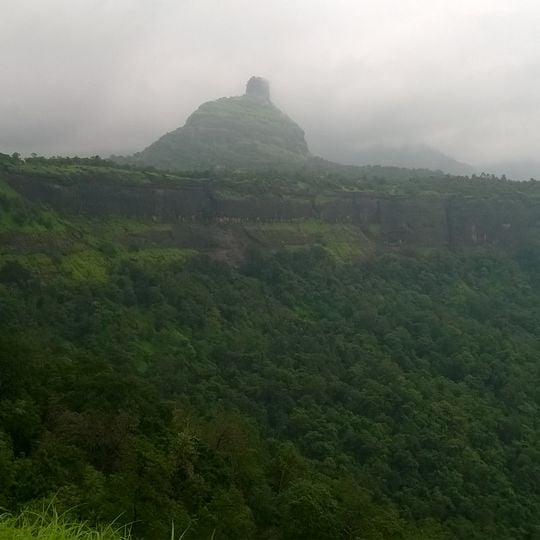
Kothaligad, Ancient fort in Raigad district, India
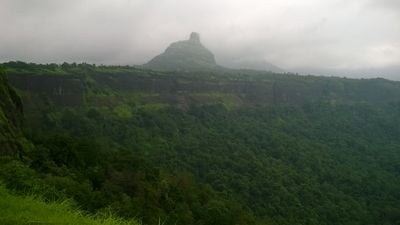
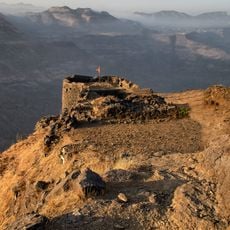
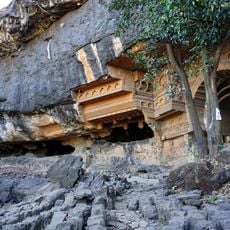
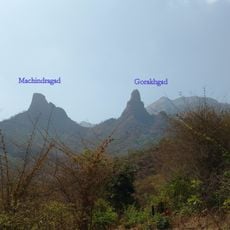
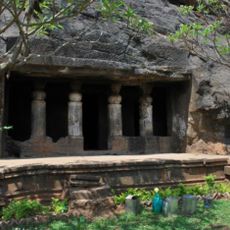
Kothaligad is a small fort at 3,100 ft on an isolated hill northeast of Karjat, Raigad district. Its flat summit narrows into a dark rocky peak, and the fortifications include a still-standing door and two water tanks. A large cave with pillars carved from the living rock stands at the base, and a staircase cut through a vertical shaft leads to the top.
The cave and temple carvings date to the 13th century, but the fort's recorded history begins in 1684, when Aurangzeb sent Abdul Kadir and Alai Biradkar to take it. A Mughal munshi, Kazi Haidar, bribed the garrison commander Mankoji Pandhare to open the gate at night, and the fort was renamed Miftah-ul-Fateh. The Marathas retook it on 2 November 1817 under Bapurao, and Captain Brooks recovered it for the British on 30 December 1817.
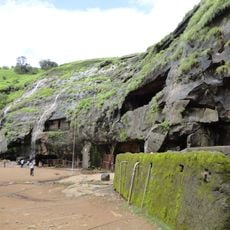
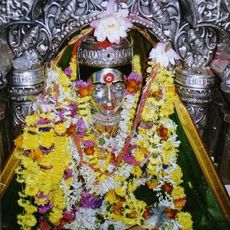
The cave at the base is named for Bhairoba, and its ceiling is held up by carved pillars cut from the living rock. Four or five round hollows are cut into the floor, and old cannonballs lie in the cave. A separate cave of the goddess stands beside a water cistern, reached first on the climb from Peth village.
The ascent involves a trek of roughly 6.5 kilometers starting from Ambivali village, requiring steady climbing across uneven terrain. Food and water can be found at the base settlement before heading up.
Inside the fort sits a tunnel-shaped chimney formation that acts as an internal passage to reach the uppermost level. This hidden construction demonstrates how builders cleverly used the natural rock formation.
The community of curious travelers
AroundUs brings together thousands of curated places, local tips, and hidden gems, enriched daily by 92,882 contributors worldwide.