Pavurallakonda, Buddhist monastic complex in Visakhapatnam, India.
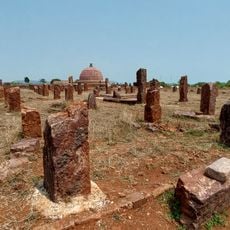
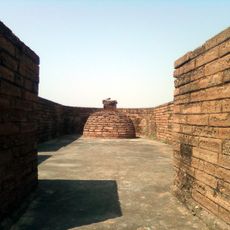
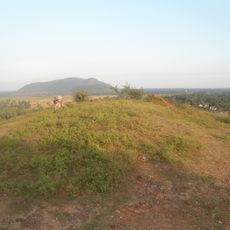
Pavurallakonda is a ruined hilltop Buddhist monastic complex on a 150-metre hill near Bheemunipatnam, about 25 km north of Visakhapatnam. Its remains include foundations of viharas, circular chaityas, votive stupas and halls, with two Brahmi label inscriptions. About sixteen rock-cut cisterns for rainwater storage are carved on the hill.
Pavurallakonda was inhabited from the 3rd century BCE to the 2nd century CE, when it was one of the largest Buddhist monasteries in North Coastal Andhra. Excavations in 1990–91 uncovered two Brahmi inscriptions, vihara foundations, circular chaityas, votive stupas and halls. Four inscriptions have been found: one from the 3rd century BCE and three from the 1st–2nd centuries CE, one recording a gift by villagers of Pala. A Dutch guesthouse was later built on the site, partly disturbing it and reusing monastery bricks.
The name Pavurallakonda means 'Hill of the Pigeons' in Telugu, though local studies link it to the white stones (pavurallu) on the hillock. Four inscriptions were found here: one from the 3rd century BCE, three from the 1st–2nd centuries CE. One records a villager named Pala donating a chatra, a trough and a mandapa to the monastery; others list monks' names.
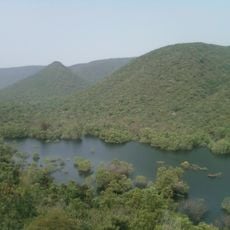
The hill rises about 150 m above sea level near Bheemunipatnam, roughly 25 km north of Visakhapatnam, with the Gosthani River and the coastline visible from the top. Excavation and restoration work continues at the site, so some areas may be fenced or off-limits.
The hill is also called Narasimhaswamy Konda, and its name is debated: pavuralu means pigeons in Telugu, but locally pavurallu refers to the white stones on the hillock. The site holds about sixteen rock-cut cisterns for rainwater, more than at the similarly named Bavikonda and Thotlakonda.
The community of curious travelers
AroundUs brings together thousands of curated places, local tips, and hidden gems, enriched daily by 92,878 contributors worldwide.