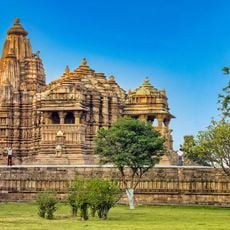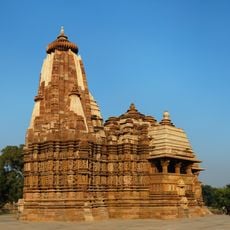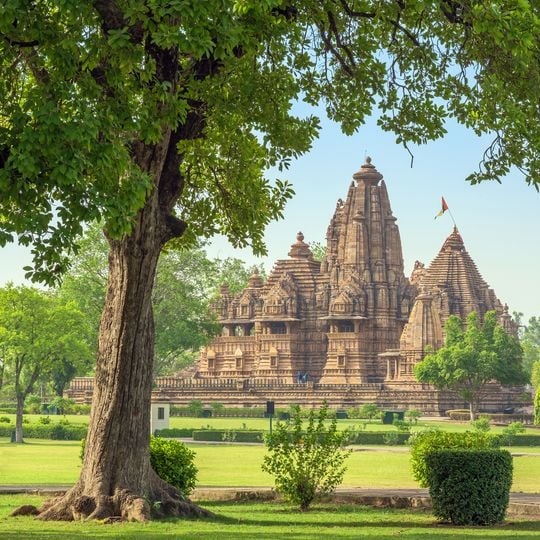
Lakshmana Temple, Hindu temple in Khajuraho, India
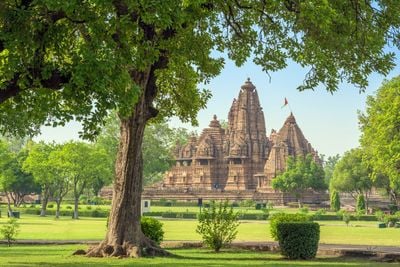
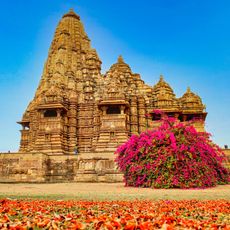
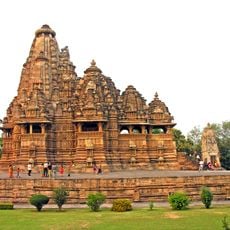
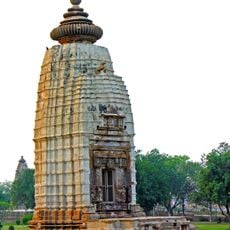
Lakshmana Temple stands on a raised platform and is covered with detailed stonework showing deities, mythological scenes, and everyday moments across its outer walls. Every surface is decorated with these fine carvings.
An inscription in the mandapa records that the temple was completed under King Dhanga (reigned c. 950–1008), though his father Yashovarman commissioned it. Yashovarman died around 954, so construction likely took place between 930 and 950. The name Lakshmana comes from Yashovarman's byname Lakshavarman, not from the Ramayana figure.
The walls show scenes from everyday and religious life carved in stone a thousand years ago. Visitors can see how people worked, celebrated, and prayed in that era.
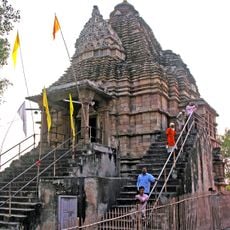
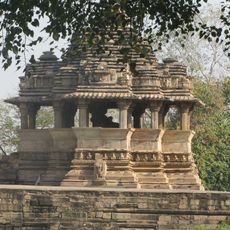
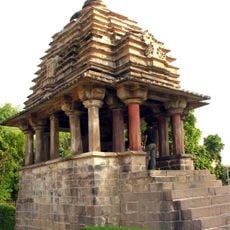
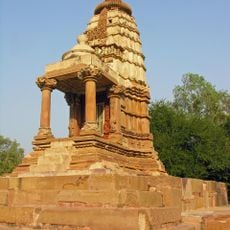
The temple sits in the Western Group of Khajuraho, in Chhatarpur district, Madhya Pradesh. The whole complex rests on a high jagati platform reached by steps, and the sanctum has a circumambulation passage. The four corner shrines and the small Garuda shrine facing the entrance stand on the same raised ground.
The sanctum's three-headed, four-armed Vaikuntha Vishnu has a human central face flanked by a boar (Varaha) and a lion (Narasimha). A niche on the temple exterior shows the sculptor and his disciples at work, a portrait of the builders carved into their own monument.
The community of curious travelers
AroundUs brings together thousands of curated places, local tips, and hidden gems, enriched daily by 92,641 contributors worldwide.