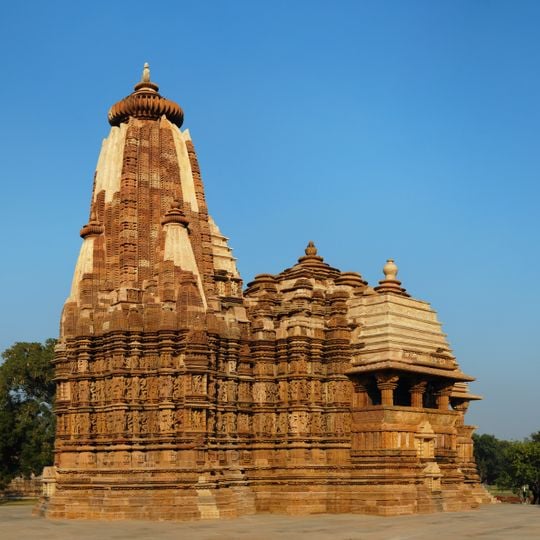
Devi Jagadambi Temple, Hindu temple in Khajuraho, India
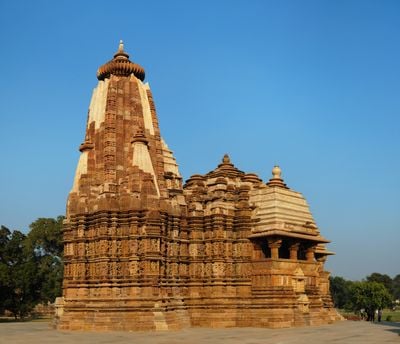
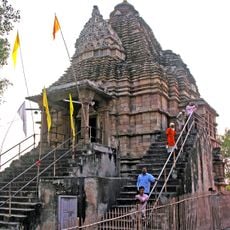
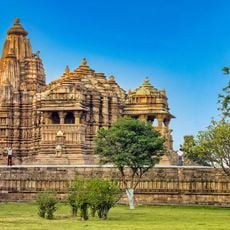
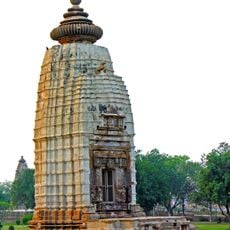
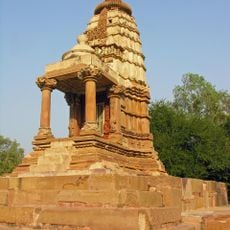
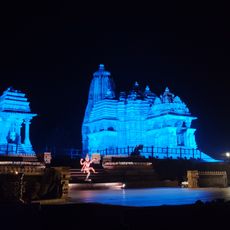
Devi Jagadambi Temple is a sandstone Hindu temple at Khajuraho, built in the early 11th century. Its tallest element is a tapering shikhara tower with carved vertical bands and a ribbed finial, beside a lower stepped roof with a small round finial. Three bands of carvings, including numerous mithunas, encircle the body, and the sanctum holds a large image of the goddess.
The Devi Jagadambi Temple was built in the early 11th century under the Chandela dynasty, whose main building phase at Khajuraho ran roughly from 970 to 1030 CE. Its original dedication is uncertain: it now honours the goddess Jagadamba, but the image in the sanctum was replaced at some point. After the Delhi Sultanate seized the Chandela kingdom in the 13th century, the temples stood neglected until T.S. Burt was guided to them in the 1830s.
The temple is named after Jagadambika, a goddess linked to Devi; whether this was the original dedication is unclear. The sanctum holds a large image of the Goddess (Parvati), installed after the original figure was replaced at some point. Festivals held here include Navaratri, Durga Puja, Ram Navami and Dussehra.
The temple sits within the main Khajuraho cluster and is easily reached on foot if you are staying in the town, with no special transportation needed. Early morning or late afternoon visits work best, as cooler temperatures make exploration comfortable and sunlight highlights the stone carvings beautifully.
The sanctum's image of the goddess was replaced at some point, so the figure now worshipped is not the original one; the German survey of the temple notes this explicitly. The temple's dedication to Jagadamba may likewise not match its first consecration, which remains uncertain.
The community of curious travelers
AroundUs brings together thousands of curated places, local tips, and hidden gems, enriched daily by 92,783 contributors worldwide.