Sanjay National Park, National park in Chhattisgarh and Madhya Pradesh, India
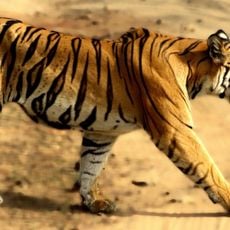
Sanjay National Park stretches across the border between Chhattisgarh and Madhya Pradesh, forming a continuous forest tract with steep hills and rivers winding through sal woodlands. The terrain shifts between open grasslands and dense vegetation where tigers, leopards and bison move through the undergrowth.
The park was established in 1981 and named after the reformer Guru Ghasidas, who launched the Satnami movement against social discrimination in the late 18th century. The protected area was later connected with the neighboring Dubri forest to secure migration routes for large mammals.
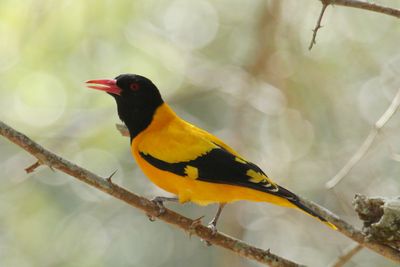
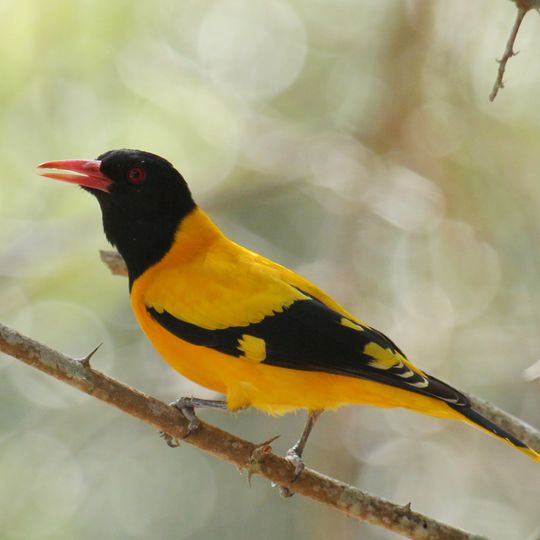
The park's name comes from Dubri village, and the forests are mostly sal, with bamboo and species such as tendu, mahua, harra and amla. The Hindi sources record 309 bird species, among them the golden-hooded oriole, racket-tailed drongo, Indian pitta, lesser adjutant and several vulture species. The adjoining Son Gharial Sanctuary, linked to the same tiger reserve, is known for gharials, muggers and turtles.
The best visiting period runs from November to February, when heat eases and animals appear more often near water sources. Guided safaris in open vehicles start early in the morning, as the routes through dense forest are hard to navigate alone.
The last confirmed Asiatic cheetahs in India were recorded in this tract, in the former Surguja State area that now includes Koriya district. Gaur vanished from the park in 1997; in 2023, 43 gaur were brought in from Kanha and Satpura Tiger Reserves. A white tiger named Mohan was captured here by Martand Singh, king of Rewa, in 1951.
The community of curious travelers
AroundUs brings together thousands of curated places, local tips, and hidden gems, enriched daily by 92,645 contributors worldwide.