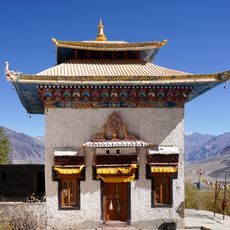
Karsha Monastery, Buddhist monastery in Padum Valley, Zanskar, India
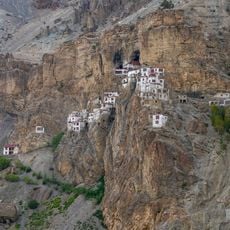
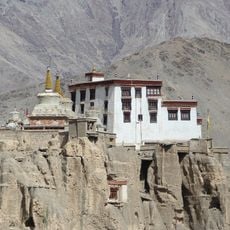
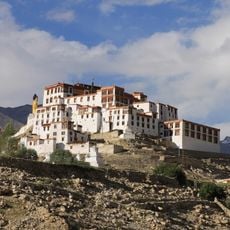
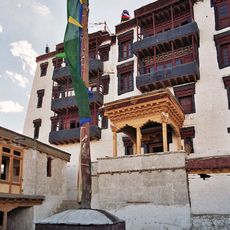
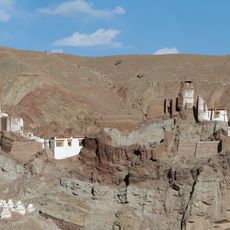
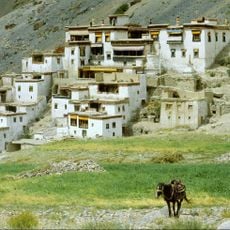
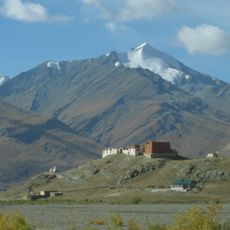
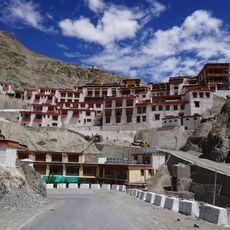
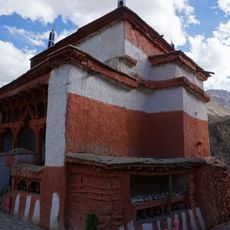
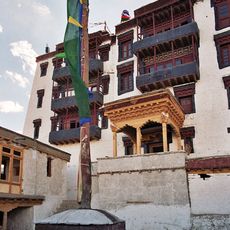
Karsha Monastery is a Buddhist monastery with white buildings stacked across mountain slopes, positioned near where the Doda River flows through the valley. The complex contains multiple temples and chambers arranged across the hillside, climbing upward in connected levels.
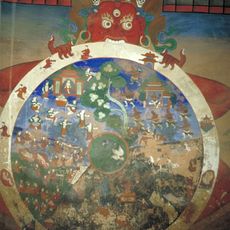
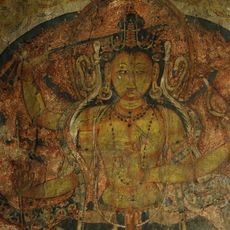
Karsha Monastery was founded by the translator Phagspa Shesrab under the Gelugpa order. Its oldest surviving structure, the Avalokiteshvara temple Chuk-shik-jal, holds wall paintings linked to the era of Rinchen Zangpo (958–1055). The Mons, a Buddhist population in the western Himalayas since the Kushan dynasty, are credited with building 30 monasteries, chortens and temples, including Karsha.
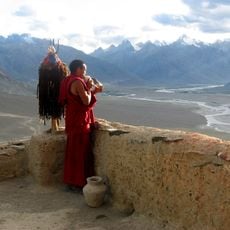
The Karsha Gustor festival fills the courtyard with masked cham dances; the black hat dance recounts the 9th-century killing of the Tibetan king Langdarma by a Buddhist monk. Monks share a ritual cake called storma at the end, and an effigy is sometimes burned. The monastery's full name is Karsha Chamspaling, and its spiritual head is Ngari Rinpoché, the Dalai Lama's younger brother.
The monastery sits about 9 kilometers from Padum and is most accessible during July to September when weather conditions are stable. Visitors should wear sturdy footwear, as the path is mountainous and often steep.
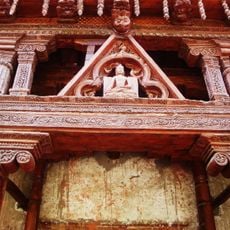
The monastery houses a statue of Lhaso Cho Rinpoche brought from Lhasa in the 1960s, decorated with a crown made of carnelian and turquoise stones. This rare craftsmanship reflects the connection to Tibet and the spiritual importance this figure holds for worshippers.
The community of curious travelers
AroundUs brings together thousands of curated places, local tips, and hidden gems, enriched daily by 92,870 contributors worldwide.