Monsoon Palace, Hilltop palace in Udaipur, India
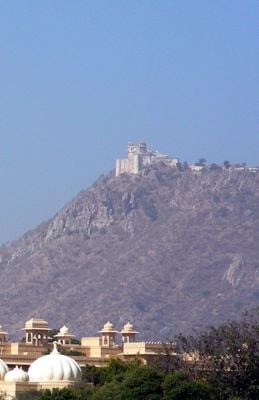
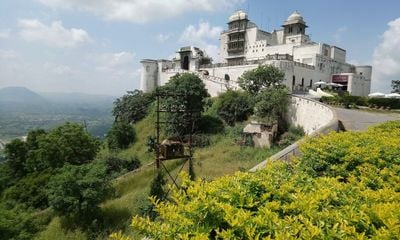
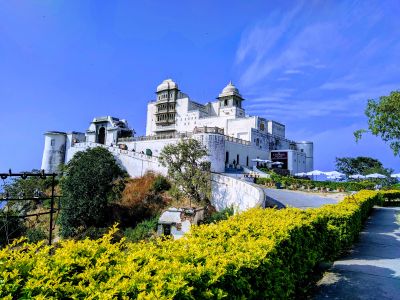
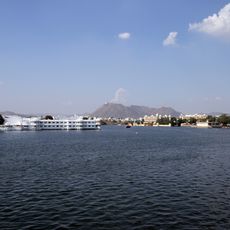
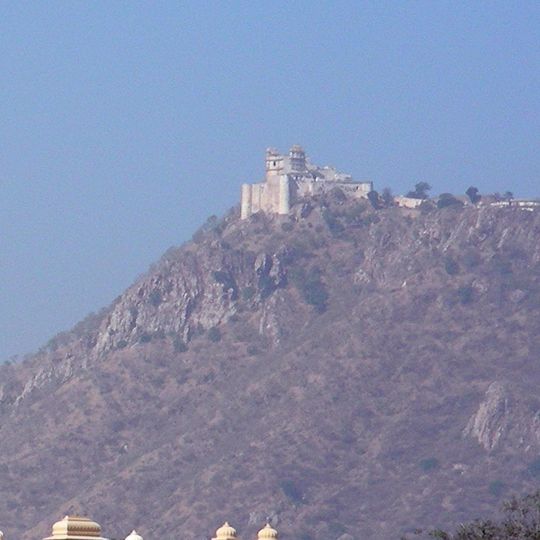
Monsoon Palace, also called Sajjan Garh Palace, stands on Bansdara peak of the Aravalli Range at 944 m above sea level, overlooking Lake Pichola about 340 m below. Built of white marble, it has high turrets, a grand central court with a staircase, and marble pillars carved with leaf and flower motifs. Its walls are plastered with lime mortar, and domes, fountains and jharokas crown the structure.
Maharana Sajjan Singh began building in the 19th century and originally planned a larger complex to observe monsoon clouds. Later rulers completed some parts and used the site as a retreat during the rainy season.
The name Sajjangarh comes from its founder and the structure displays typical Rajput building traditions with high pillars and inner courtyards. Visitors can walk through the different levels and see ornamental work on walls and arches.
A visit works well in late afternoon when the light softens and the heat eases. The road from Udaipur to the summit runs through a wildlife sanctuary and climbs about 8 kilometers (5 miles) uphill.
Maharana Sajjan Singh planned the palace as a nine-storey astronomical centre, but died in 1884 before it was finished; his successor Fateh Singh completed it. An underground cistern in the precincts holds 195,500 litres of harvested rainwater, yet supply proved inadequate and the palace was abandoned. Cannons from 1764, when the hill served as an ordnance dump against the Scindias, still remain.
The community of curious travelers
AroundUs brings together thousands of curated places, local tips, and hidden gems, enriched daily by 93,079 contributors worldwide.