Udayagiri and Khandagiri Caves, Jain cave temple in Bhubaneswar, India.
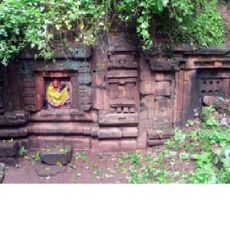
Udayagiri and Khandagiri Caves are two adjacent hills 3 km south of Bhubaneswar, Odisha, holding 18 and 15 rock-cut caves respectively, carved in the 2nd or 1st century BCE. The long facades are cut into brown, layered rock, with rows of rectangular openings between thick pillars, a horizontal ledge dividing two levels, and arched niches below.
King Kharavela commissioned the complex in the first century before the common era as dwellings for ascetics of the Jain community who withdrew there for meditation and study. Later additions expanded the site, while monks continued to use the chambers over several centuries.
The name Udayagiri means sunrise hill, while Khandagiri translates as broken hill, both referring to the natural appearance of the two elevations. Several caves display inscriptions in Brahmi script that visitors can see on the rock walls today, offering a window into the religious practice of the monastic community at that time.
The two hill sections lie close together and can be explored comfortably in half a day if you start early in the morning or choose late afternoon. Flat sandals are helpful on the uneven rock paths, and bringing some drinking water is advisable since there is little shade on site.
The Hathigumpha inscription in cave 14 records King Kharavela's reign in Brahmi script and opens with the Namokar Mantra, a Jain invocation. Visitors can also find a raised floor section at the entrance of many cells, likely used as a headrest when sleeping.
The community of curious travelers
AroundUs brings together thousands of curated places, local tips, and hidden gems, enriched daily by 92,656 contributors worldwide.