East Kolkata Wetlands, Ramsar wetland site in Bidhannagar, India
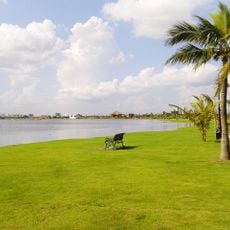
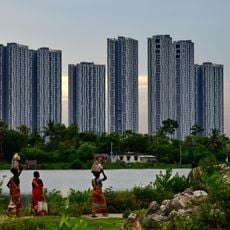
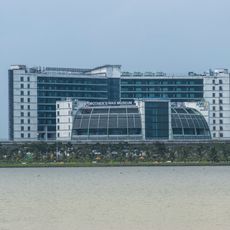
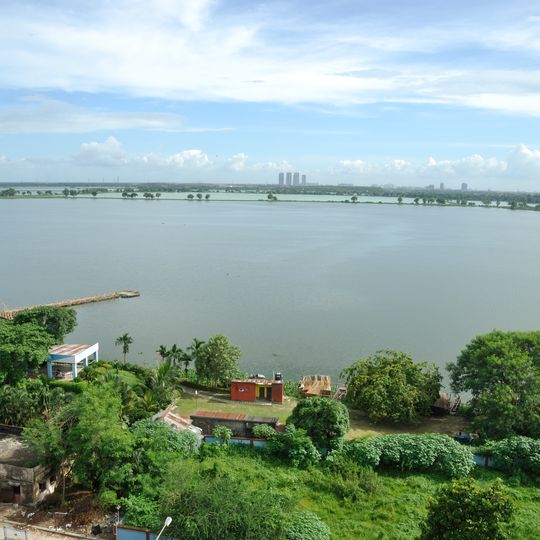
East Kolkata Wetlands covers 125 square kilometres east of Kolkata, combining salt marshes, agricultural fields, sewage farms and settling ponds. Wastewater from the city flows through the ponds, where nutrients feed fish farms and vegetable plots. A low stone embankment juts into the open water, with trees and tall buildings on the far horizon.
In 1991 the West Bengal government allotted 227 acres of wetlands for a World Trade Centre. The NGO PUBLIC challenged the allotment in the Calcutta High Court, and Justice Umesh Chandra Banerjee's order rejected the project in its original form. The state did not appeal; it applied for Ramsar designation, granted in 2002, and passed the East Kolkata Wetlands (Management & Conservation) Act in 2006.
Local farmers and fishermen developed the sewage-fed system themselves, and the name East Calcutta Wetlands was coined by Dhrubajyoti Ghosh, an IUCN adviser who traced what happens to the city's sewage. Wetlands Day was first observed in Kolkata on 16 June 1990, seven years before World Wetlands Day was established.
It is best visited during dry months when paths are walkable and field activity is visible throughout the area. Flat shoes and binoculars are helpful for watching the birds and observing daily farm work.
The water is used not just for fish farming, but the fish ponds themselves act as natural cleaning chambers that break down pollutants. This biological process transforms a city waste product into a working ecosystem that feeds people.
The community of curious travelers
AroundUs brings together thousands of curated places, local tips, and hidden gems, enriched daily by 94,229 contributors worldwide.