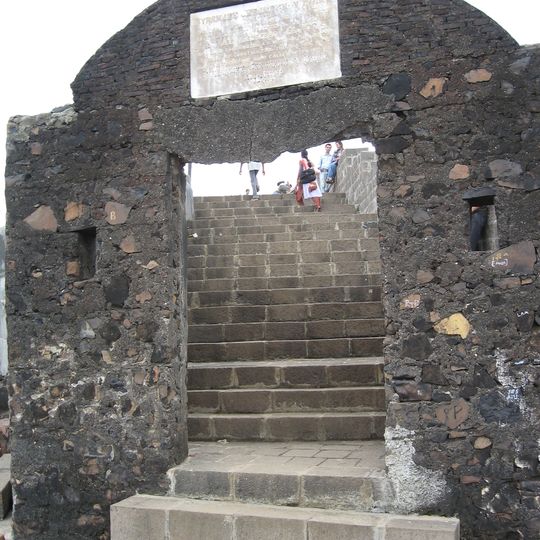
Castella de Aguada, Portuguese fortress in Bandra, India.
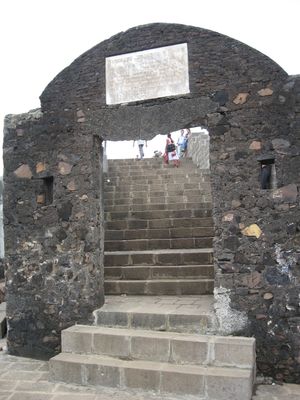
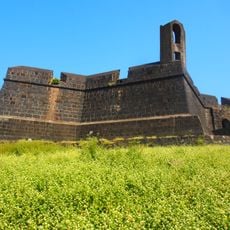
Castella de Aguada is a stone fortification on a headland in Bandra that rises from sea level with multiple levels, ramparts, and connecting pathways throughout its structure. The construction features thick stone walls forming arches and platforms, with different sections offering varying heights and vantage points.
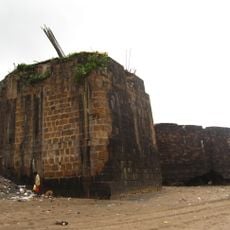
The fortification was built in 1640 by Portuguese forces to monitor Mahim Bay and protect merchant vessels in the area. British troops later destroyed substantial portions of the structure as they expanded their control in the region.
The name Castella de Aguada derives from the Portuguese for "Fort of the Waterpoint", after a freshwater spring nearby that supplied passing ships. The fort appears in Hindi films such as Dil Chahta Hai and Buddha Mil Gaya. Since 2003 the Bandra Band Stand Residents' Trust, led by MP Shabana Azmi, has worked to conserve it.
The site offers walking trails through the various levels of the ruins with viewing areas facing the sea. Visitors should wear sturdy shoes as the ancient stone paths are uneven and some sections climb steeply.
The fort's name comes from a freshwater spring nearby that supplied drinking water to passing Portuguese ships; "aguada" means waterpoint. During Portuguese rule the fort was armed with seven cannons and smaller guns. The 2003 restoration, led by MP Shabana Azmi, repaired a collapsing brick gateway arch and tidal-eroded foundation masonry.
The community of curious travelers
AroundUs brings together thousands of curated places, local tips, and hidden gems, enriched daily by 94,389 contributors worldwide.