Didarganj Yakshi, Ancient stone statue in Bihar Museum, India
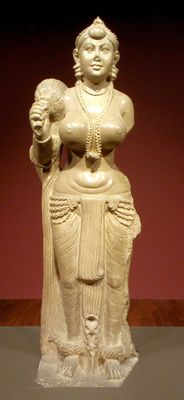
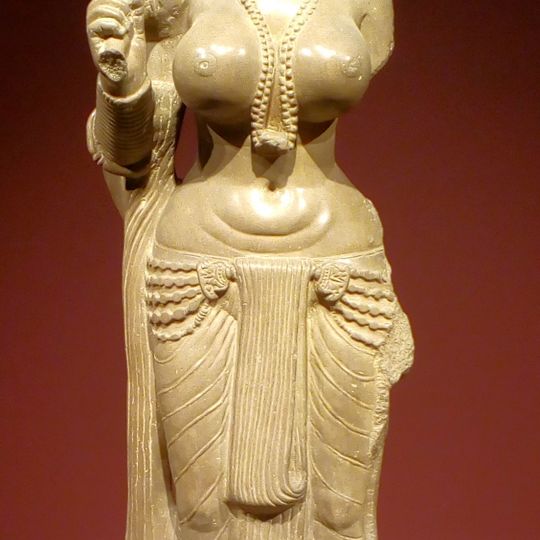
The Didarganj Yakshi is a 1.57 m tall sandstone figure of a woman, standing on a 49.5 cm pedestal, now in the Bihar Museum in Patna. Her right arm is raised and bent, holding a fly-whisk (chauri); the left arm is broken. She wears a beaded necklace, and her lower garment has a central pleated panel and side sections with layered, scalloped ridges. The surface is highly polished.
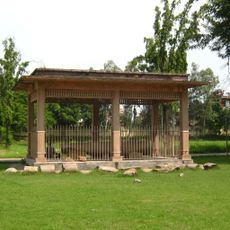
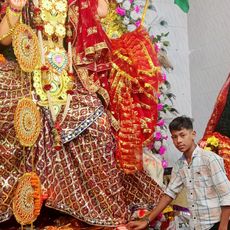
Villagers found the figure on 18 October 1917 in the sands of the Ganges at Didarganj, near the Qadam-i-Rasul Mosque in Patna City; accounts differ, naming either Ghulam Rasul or Dhobi washerwomen. Local people set up a bamboo shrine and worshipped it as a goddess until police removed it for the Patna Museum. Once dated to the 3rd century BCE for its Mauryan polish, it is now placed around the 1st–2nd century CE.
The name comes from Didarganj, the hamlet on the Ganges bank where villagers found the figure in 1917. Yakshis are folk nature spirits tied to water and trees, absorbed into Buddhist, Hindu and Jain worship; at Bharhut such figures carry their names in inscriptions. A recent study proposes the figure may be the goddess Indrakshi Durga.
The figure stands in a climate-controlled gallery at the Bihar Museum, where temperature and humidity remain steady to protect the sandstone. Visitors can view it closely through a protective case during regular museum hours and observe the fine details of the polish and carving.
The shine of the surface comes from a technique that still puzzles researchers, as the polish has barely faded after more than two thousand years. Some scholars suggest that special tools or natural substances were used to achieve this effect, but clear evidence remains elusive to this day.
The community of curious travelers
AroundUs brings together thousands of curated places, local tips, and hidden gems, enriched daily by 93,763 contributors worldwide.