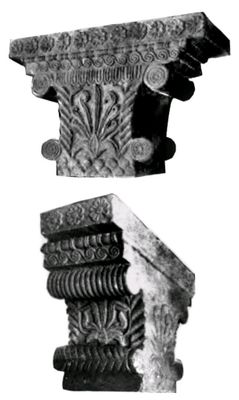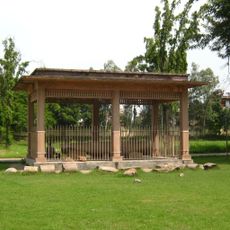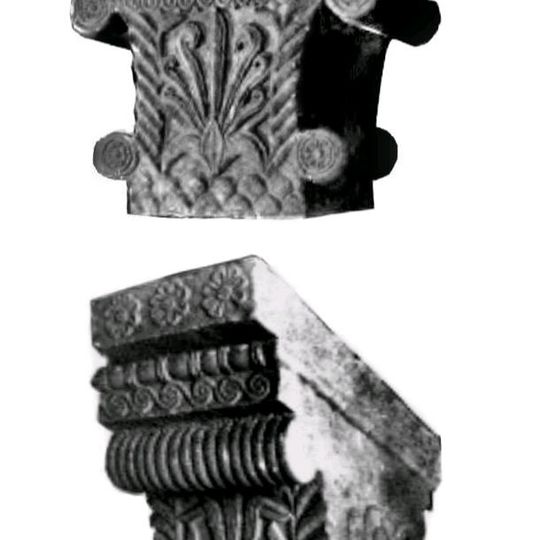
Pataliputra capital, Archaeological stone capital at Patna Museum, India
Pataliputra capital is an archaeological artefact carved from sandstone at Patna Museum in India. The rectangular object shows carved rosettes, wavy lines and beaded chains as decoration.
An archaeologist found this capital in the late 19th century buried in the ground of an old palace site. The piece dates from the time when Pataliputra was a major city under the Maurya.
The name Pataliputra refers to the ancient capital of the Maurya Empire, preserved today in this museum piece. Visitors can see how decorative motifs from the eastern Mediterranean appear alongside local designs, reflecting contact between distant regions.
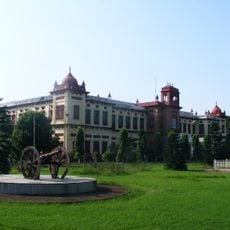
The capital sits in the exhibition halls of the museum in Patna, where it appears alongside other finds from the region. Visitors should allow time to examine the fine details of the stonework closely.
The arrangement of rosettes follows a specific pattern that varies across different sides of the stone. The waves in the decoration mostly flow in one direction, suggesting deliberate design.
The community of curious travelers
AroundUs brings together thousands of curated places, local tips, and hidden gems, enriched daily by 60,000 contributors worldwide.