Radha Raman Temple, Hindu temple in Vrindavan, India
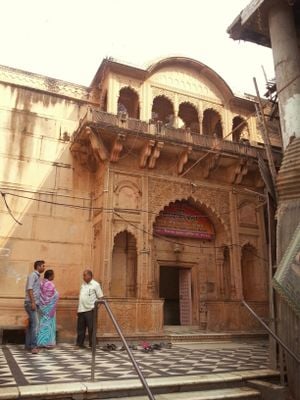
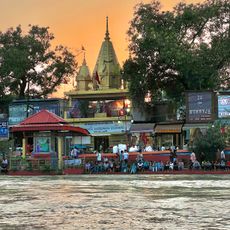
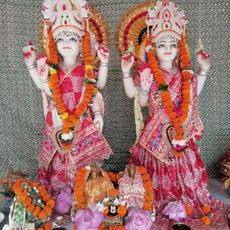
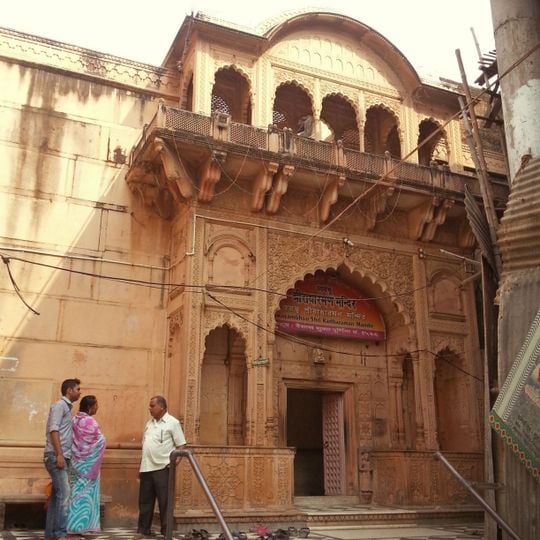
Radha Raman Temple is a Hindu temple in Vrindavan, Uttar Pradesh. The two-story stone structure displays elaborate carvings on columns and arches, while the central chamber houses a deity in the form of a Shaligram stone.
Gopala Bhatta Goswami established the temple in 1542, after a Damodara shila among twelve Shaligrama shilas he had brought from the Kali-Gandaki River in Nepal manifested as the flute-playing Krishna deity Radha Raman. The image has remained in Vrindavan since, even during the 17th-century iconoclastic raids of the Mughal ruler Aurangzeb, when most other deities were taken out of the city and hidden.
The name joins Radha and Raman as names for Krishna and his companion, while pilgrims kneel before the central shrine opening to receive a view of the deity. Believers gather in the courtyard to sing bhajans together, accompanied by bell sounds and drum rhythms.
The compound opens several times daily for darshan, with morning ceremonies beginning at sunrise and evening rituals continuing until sunset. Visitors should expect to remove shoes before entering and anticipate crowding during main prayer times.
The kitchen fire lit in the temple's early days still burns, and the food offerings are cooked there by the male members of the Goswami families, not by hired priests. These families take turns according to a calendar allotted to them in advance, and each serves with his own disciples.
The community of curious travelers
AroundUs brings together thousands of curated places, local tips, and hidden gems, enriched daily by 92,722 contributors worldwide.