Adhai Din Ka Jhonpra, Mosque in Ajmer, India
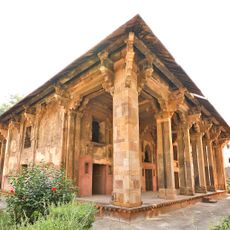
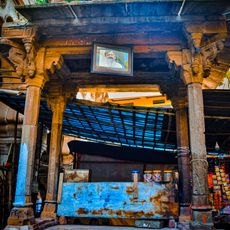
Adhai Din Ka Jhonpra is a mosque in Ajmer district, India, protected as a monument of national importance. The interior is supported by 344 columns that hold up ten domes, while the sandstone walls and columns are covered with fine carvings.
Qutb-ud-Din-Aibak commissioned the mosque in 1192 CE; it was designed by Abu Bakr of Herat and completed in 1199 CE, as recorded in an inscription in the central mihrab dated Jumada II 595 AH. The site had earlier held a Sanskrit college built by the Chauhan king Vigraharaja IV, and its pillars and stone were reused. Iltutmish added a screen wall with corbelled engrailed arches in 1213 CE.
The prayer hall displays decorated stone arches with Arabic inscriptions that span several levels, reflecting how different artistic traditions came together. Visitors today see a mix of columns from different origins standing side by side, telling the story of how the building came to be.
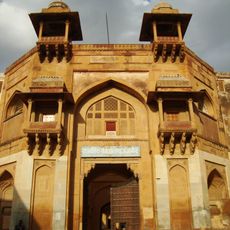
The building stands on a low plinth, so the arched facade is reached by a few steps; the prayer hall inside is a forest of reused columns, and visitors walk between them rather than through open floor. The site is managed by the Archaeological Survey of India's Jaipur circle, which took it over after 1947.
The name translates to shed of two and a half days, referring to a local story about the remarkably short building time. This tradition is often told, even though the actual completion likely took much longer.
The community of curious travelers
AroundUs brings together thousands of curated places, local tips, and hidden gems, enriched daily by 92,694 contributors worldwide.