Castel Nuovo, Medieval castle in Naples, Italy
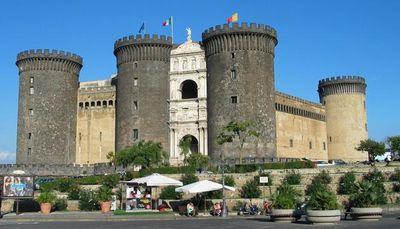
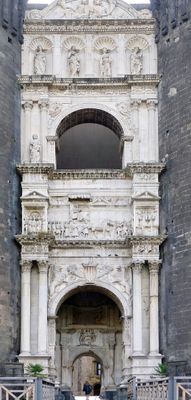
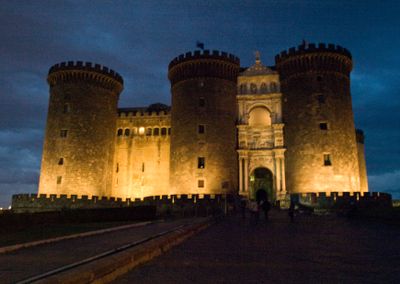
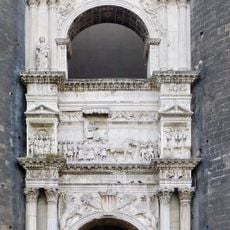
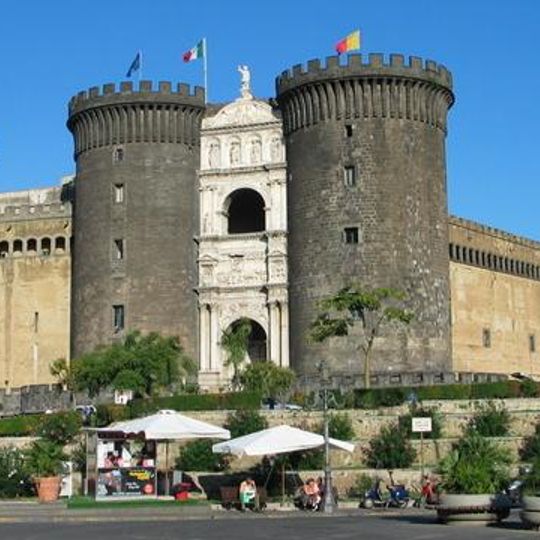
Castel Nuovo is a medieval fortress by the harbor in Naples, built around five round defensive towers linked by thick stone walls. The main entrance features a white marble arch in Renaissance style that rises between two watchtowers, creating a clear break in the Gothic walls.
Charles I of Anjou moved the capital from Palermo to Naples in 1266 and had Castel Nuovo built from 1279, with the French architect Pierre de Chaulnes in charge; the works took only three years. Charles never lived there, and the palace stayed unused until his death in 1285. Alfonso V of Aragon rebuilt the fortress in its present form from 1453, and the work ended in 1479, after his death.
The name Maschio Angioino links the castle to the Angevin dynasty that built it; the Angevins were French, and the castle remained their royal seat. In the Palatine Chapel Giotto painted frescoes in 1332, and the Hall of the Barons takes its name from the barons arrested there in 1487 after their conspiracy against King Ferdinand I.
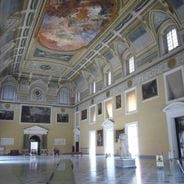
The castle faces Piazza Municipio, with the marble triumphal arch marking the entrance between the two flanking towers. The Palatine Chapel and the Barons' Hall are inside, and the upper floors are reached by stairways. The civic museum occupies the first and second floors.
In the armory room, a glass floor reveals a level from Roman times, showing ancient remains directly beneath visitors' feet. This perspective connects the medieval fortress to the older city below and shows the different layers from which modern Naples has grown.
The community of curious travelers
AroundUs brings together thousands of curated places, local tips, and hidden gems, enriched daily by 92,666 contributors worldwide.