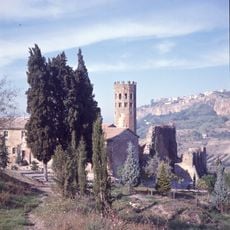
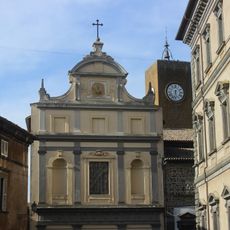
Belvedere Temple, Etruscan archaeological temple in Orvieto, Italy.
Belvedere Temple is an Etruscan temple in Orvieto whose plan follows the canon set out by Vitruvius: a southwest-facing building on a high rectangular podium 21.90 m long, with a front staircase, a four-column pronaos and three adjoining chambers, the central one larger. The facade (16.30 m) and rear (16.90 m) are asymmetrical for reasons still unknown. The base, steps, four column bases and some perimeter blocks are visible.
The temple probably dates from the early 5th century BC and was in use until the first decades of the 3rd century BC. It was rediscovered by chance in 1828 during construction of the Via Cassia Nuova, which exposed its remains.
The deity worshipped here is not known for certain: a painted inscription on a cup found nearby names Tinia, the Etruscan Zeus, and some scholars also propose the god Suri. The temple's terracotta statues and reliefs, dated to 380–370 BC, may depict the Trojan War episode of choosing the Achaean hero to face Hector.
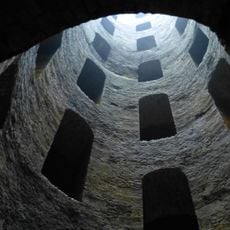
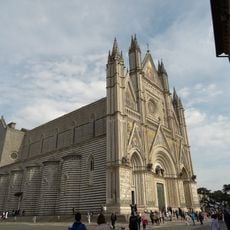
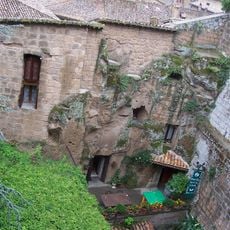
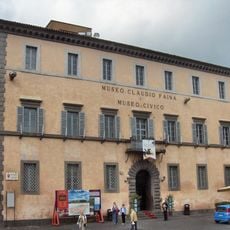
You can view the site's remains on location near Saint Patrick's Well, where they are partly exposed and accessible in the open. However, the best-preserved pieces with their decorative elements are housed in the Faina Museum on Piazza Duomo, where they are displayed alongside other excavated objects.
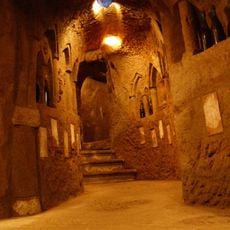
Below the temple lay an underground chamber lined with cocciopesto and a water cistern, suggesting this place was designed for specific ritual ceremonies. These water systems reveal that the Etruscans employed sophisticated techniques for their religious practices.
The community of curious travelers
AroundUs brings together thousands of curated places, local tips, and hidden gems, enriched daily by 93,393 contributors worldwide.