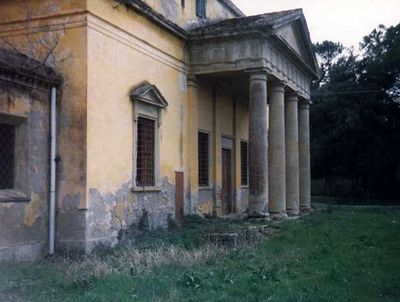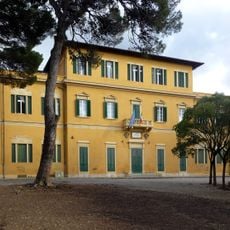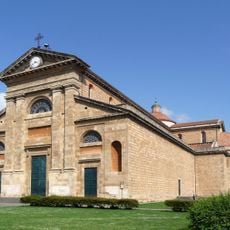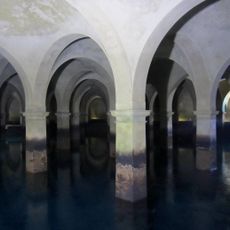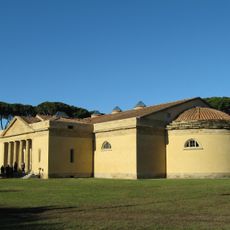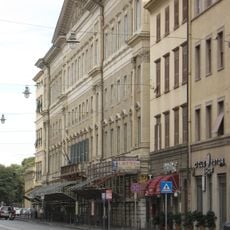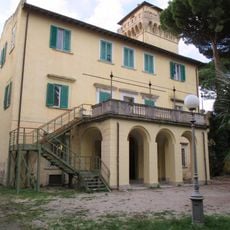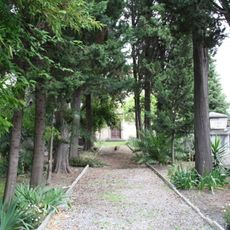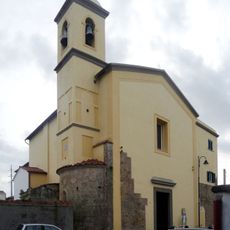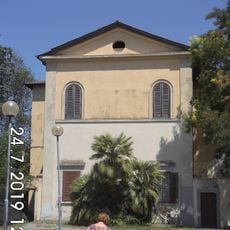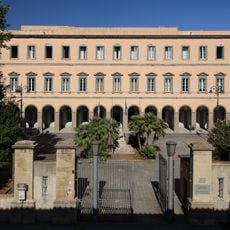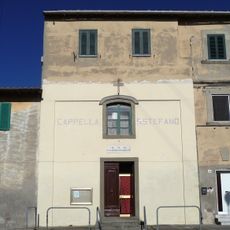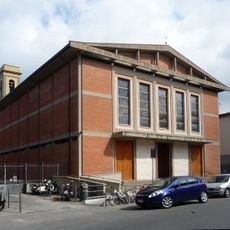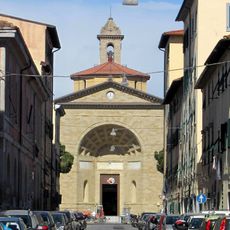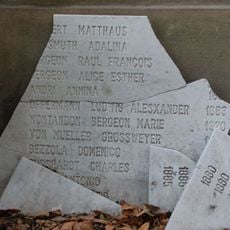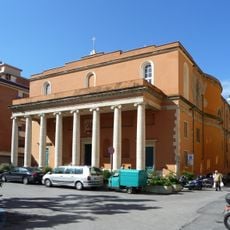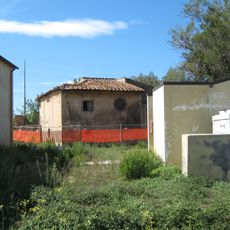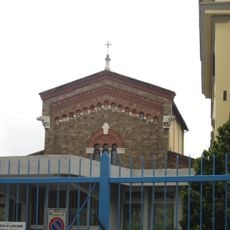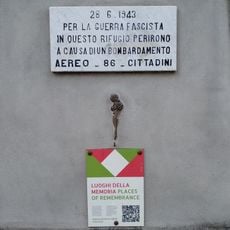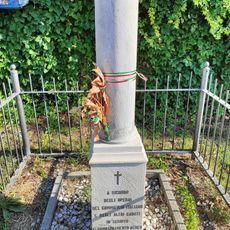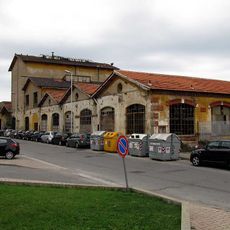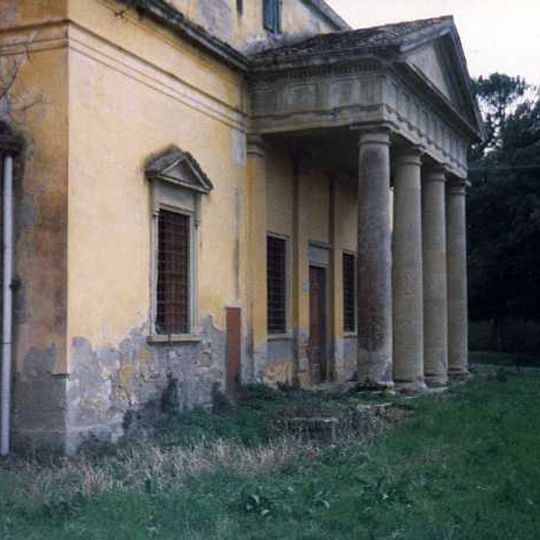
Bagnetti della Puzzolente, Neoclassical thermal bath building in Livorno, Italy.
Bagnetti della Puzzolente is a neoclassical bath complex in Livorno, one of Pasquale Poccianti's last works. Its plan echoes the nearby Cisternino di Pian di Rota: a rectangular body closed at the short sides by two marked apses, with a portico of four Tuscan columns carrying the entablature and pediment. Behind the modest facade lies a large underground level with two semicircular bathing pavilions.
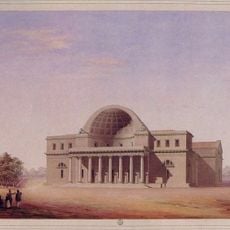
Pasquale Poccianti designed the baths for the Bartolomei family, who later passed them to the Mimbelli; they were built between 1843 and 1844 and inaugurated on 30 June 1844. A more ambitious earlier project by Poccianti was never realised, and the enterprise soon failed commercially. By the end of the 19th century the establishment had closed and was put to other uses, as newer standards were set by the nearby Acque della Salute spa.
The name Puzzolente refers to the foul-smelling sulfurous water that rose from springs on the site, which the Bartolomei family hoped to exploit for thermal cures. The building later served other purposes and appears in a scene of Luigi Comencini's 1960 film Tutti a casa.
The building is no longer active as a thermal bath and was transferred to the Diocese of Livorno in 2022. Plans are underway to transform it into a multipurpose space that includes a chapel and emergency lodging facilities.
The name Puzzolente refers to the foul-smelling sulfurous water at the site, not to the building itself. Poccianti's first, far more elaborate design for the baths survives among his papers but was never built; the executed complex was a reduced version, and the venture failed commercially, closing by the end of the 19th century. In the 1960s the building appeared in a scene of Luigi Comencini's film Tutti a casa.
The community of curious travelers
AroundUs brings together thousands of curated places, local tips, and hidden gems, enriched daily by 94,405 contributors worldwide.