Cappella Aulla, Religious chapel in Campo Santo cemetery, Pisa, Italy
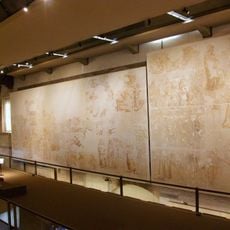
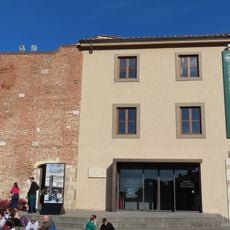
Cappella Aulla stands along the right side of Campo Santo's northern wall, aligned with the cemetery's old south entrance, now closed. A small gate closes the chapel, which connects on the left to the Ammannati chapel through a now-shut room and on the right to the rear exit, closed to the public. Its altar holds Giovanni della Robbia's glazed terracotta Assunta tra santi e Profeti of 1518.
The altarpiece was created by Giovanni della Robbia in 1518 and originally came from the Church of San Marco in Calcesana. Its relocation to Cappella Aulla reflects how religious artworks moved between Pisa's churches over time.
The altarpiece is a glazed terracotta dossal by Giovanni della Robbia, made in 1518, showing the Assumption of Mary between saints and prophets. The contract specified it be made "in terra cocta ismaltata et invetriata et adornata ad oleum... auro brunito et mordente", that is enamelled and glazed fired clay decorated with burnished gold. It stood first in the church of San Marco in Calcesana, then in San Silvestro, before reaching this chapel.
The chapel opens off the right side of Campo Santo's northern wall, opposite the old south entrance that is now closed. A gate closes it off, and the rooms linking it to the Ammannati chapel and the rear exit are shut to the public, so it is viewed from outside the railing.
A ceiling lamp from the cathedral hangs inside the chapel and local tradition connects it to Galileo Galilei's pendulum motion studies. This link to the history of scientific observation adds an unexpected dimension to the visit.
The community of curious travelers
AroundUs brings together thousands of curated places, local tips, and hidden gems, enriched daily by 92,718 contributors worldwide.