Madonna Assunta, chiesa Madre, Catholic cathedral in Favara, Italy
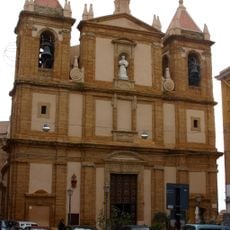
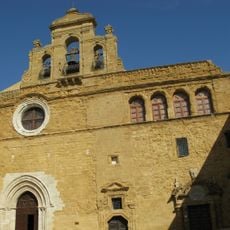
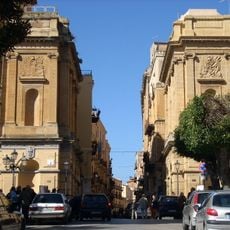
The Madonna Assunta is a neo-Renaissance church built between 1892 and 1898 to a design by Carmelo Sciuto Patti, later modified by Achille Viola. Its central plan rises 56 metres to the cross atop the dome, the largest masonry dome in Sicily. The facade, inspired by 14th- and 15th-century Lombard models, carries mosaics added in the late 1950s by Florentine artists in place of three windows. Inside, three naves are divided by columns with Ionic capitals.
A church existed on this site by 1558, recorded as Maior and titled under the Assumption by 1598; it was rebuilt in 1760 and again in 1828 with funds from Biagio Licata. The present church was built from 1892 to July 1898 and inaugurated on 10 October 1897. Architect Carmelo Sciuto Patti of Catania directed the works but could not finish; engineer Achille Viola of Castronovo completed them, partly altering the design.
Inside, the church holds religious artworks including a large 17th-century crucifix brought from the earlier building. These pieces shape how people experience and use this spiritual space today.
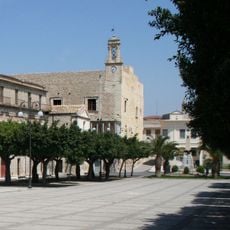
The church stands in the Piazza dei Vespri, east of Piazza Cavour, the town's main square, so it is reached on foot from the centre. The dome rises 56 metres to the cross. The facade mosaics replaced three windows around the late 1950s. Dress respectfully for this active parish church.
A custom organ built by Pacifico Inzoli from Crema sits inside this church. Around 1920, stained glass windows crafted by Giacomo Patti were installed to fill the spaces with filtered light.
The community of curious travelers
AroundUs brings together thousands of curated places, local tips, and hidden gems, enriched daily by 93,095 contributors worldwide.