Santa Maria Nuova, Gothic church in Perugia, Italy.
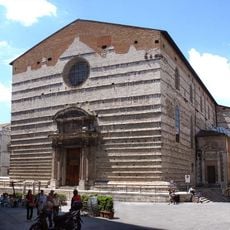
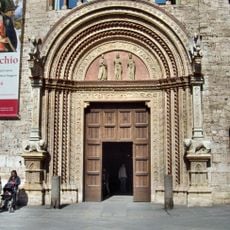
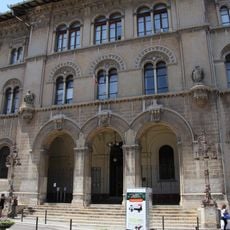
Santa Maria Nuova is a Gothic church in Perugia featuring three naves, a polygonal apse, and a red and white marble entrance portal. The interior layout shows typical medieval church design, with the apsidal chapels along the back and the naves extending forward from the entrance.
A Benedictine monastery on this site is documented in 1285. In 1372 Matteo di Giovannello Gattaponi built the Porta Sole citadel, damaging church and convent; after its demolition in 1375 the monks restored the complex. In 1404 the Silvestrini reoriented the church, adding three naves and a seven-sided apse. In 1540 the Servites moved here from Santa Maria dei Servi, demolished for the Rocca Paolina, and the church became Santa Maria Nuova.
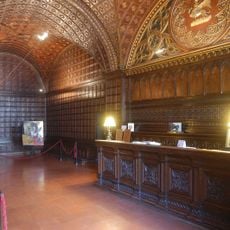
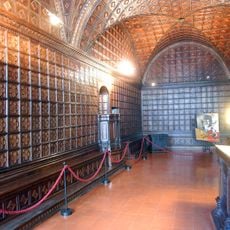
The wooden choir stalls in the apse date from 1456 and came here with the Servite friars, who moved from Santa Maria dei Servi when that church was demolished for the Rocca Paolina in 1540. The same transfer brought the columns of their old cloister, reused in the new one at via Pinturicchio 87.
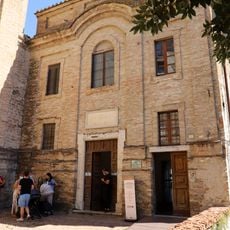
The church stands on Via Pinturicchio in the Porta Sole district. The 16th-century cloister and the 1644 bell tower are reached at number 87 of the same street, where the former chapter house now serves as a hall for conferences and events. The parish is S. Andrea e S. Lucia.
In the right apse chapel lies the wooden sarcophagus of Braccio I Baglioni (1419–1479), covered in brocade and brought here from Santa Maria dei Servi. The same chapel keeps 14th-century frescoes, and the Gothic apse still holds a carved wooden choir dated 1456.
The community of curious travelers
AroundUs brings together thousands of curated places, local tips, and hidden gems, enriched daily by 92,875 contributors worldwide.