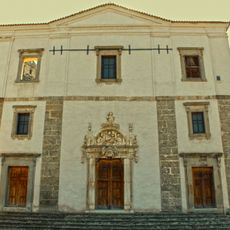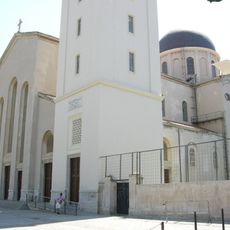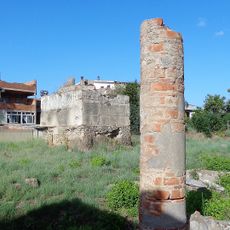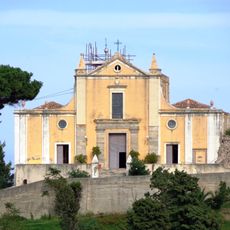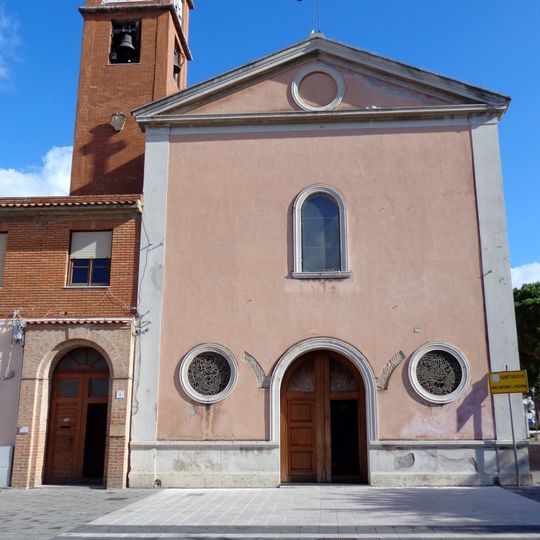
Chiesa di Sant'Antonio di Padova, 17th-century Catholic church in Barcellona Pozzo di Gotto, Italy
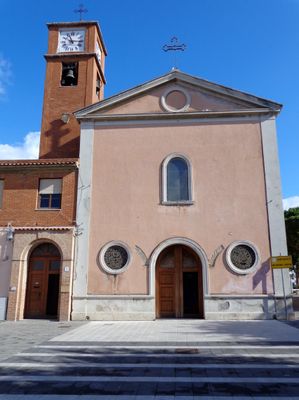
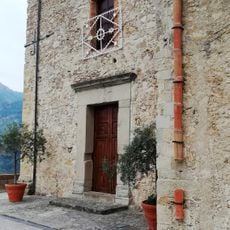
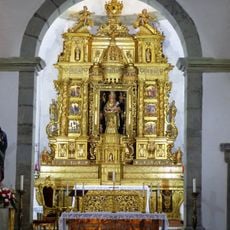
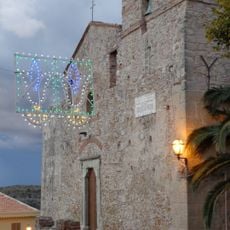
The chiesa di Sant'Antonio di Padova is a church built in the 17th century in the Sant'Antonino district. It features a wide central nave with side altars and a vestibule that leads to the main hall.
On 14 October 1613 the Observant Friars Minor obtained from the city of Castroreale a grant of land in the hamlet of Barcellona to build a small place of worship, as recorded in manuscripts kept at the Order's general curia in Rome. The friars settled in the Sant'Antonino district and built a convent, later adapted several times, and a church in the contrada Finocchito. In 1622 the convent was canonically erected with contributions from the patrons Placido Rao and Dominichella Coppolino. After the 1866 confiscation under the suppressive laws the complex housed a nursery school, then artillery barracks and a shooting range, and the church was deconsecrated and used as a stable until restoration in 1892; in 1899 it became a tobacco-processing site, and from 1936 to 1950 it returned to the friars. On 24 May 1986 the conventual church was declared a diocesan sanctuary.
The wooden statue of Saint Anthony carried in procession was moved in 1930 from the high altar to the triumphal arch pillar; since 2007 it rests on a gilded wooden processional ferculum. The 1995 stained-glass windows by fra Alberto Farina depict the miracle of the miser's heart.
The church is located in the Sant'Antonino district and welcomes visitors daily with regular religious services. It is best to check visiting times before coming, as they vary depending on Mass schedules.
On the right side entrance, there is a marble bas-relief of Saint Anthony of Padua created between 1633 and 1635. This artistic detail is easy to overlook but deserves a closer look.
The community of curious travelers
AroundUs brings together thousands of curated places, local tips, and hidden gems, enriched daily by 94,554 contributors worldwide.