Tomb of Geta, Archaeological site near Via Appia, Rome, Italy
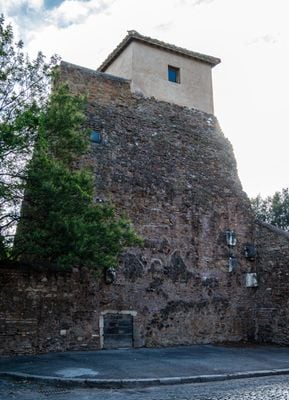
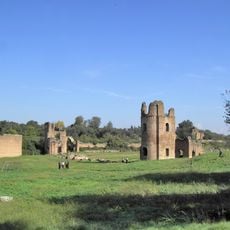
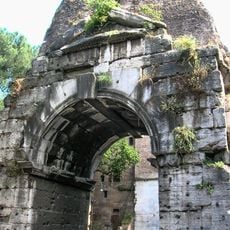
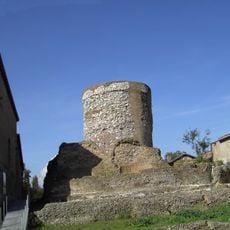
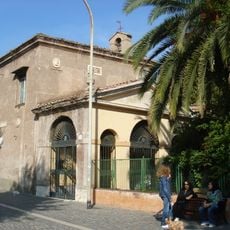
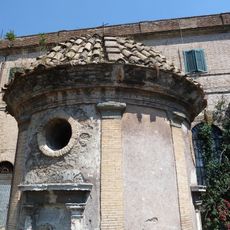
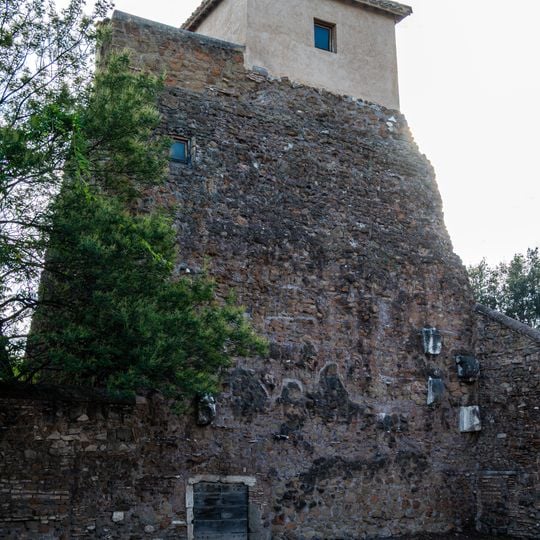
The Tomb of Geta rises on the Via Appia Antica where the road crosses the Almone, just past the railway overpass and before the church of Domine Quo Vadis. Only the concrete core survives: a quadrangular base that once carried several receding levels, now topped by a small late-medieval building. On the rough stone surface, the sockets that held the marble slabs of the facing are still visible.
The concrete core on the Via Appia Antica, near the Almone crossing, is what remains of a tomb popularly attributed to Geta, son of Septimius Severus and brother of Caracalla. The biographer Aelius Spartianus likened it to the Septizodium, though Thomas Ashby held that Geta was buried in Hadrian's Mausoleum with his father and brother. A small late-medieval building now tops the ruin.
The tomb shows how wealthy Romans honored their families and displayed status through monumental burial structures. Such tombs along the Via Appia were a way for prominent people to demonstrate their importance to travelers passing by.
The site sits along the Via Appia Antica and is accessible by bus from central Rome to the archaeological area. Early morning hours work best for viewing, when sunlight clearly illuminates the remaining structures.
The tomb is traditionally linked to Geta, son of Septimius Severus and Julia Domna and brother of Caracalla, but the biographer Aelius Spartianus compared it to the Septizodium near the Palatine, and Thomas Ashby held that Geta was buried in Hadrian's Mausoleum with his father and brother. The concrete core still shows the sockets that held its marble facing.
The community of curious travelers
AroundUs brings together thousands of curated places, local tips, and hidden gems, enriched daily by 92,890 contributors worldwide.