Catacombs of Domitilla

Log in to your account

AroundUs is a community-driven map of interesting places, built by curious explorers like you. It grows with every review, story, and photo you share.
Connect to save your favorite spots, contribute locations, and create personalized routes.
By continuing, you accept our Terms and Conditions and our Privacy Policy
Add to collection
Map
Suggest a change
Share

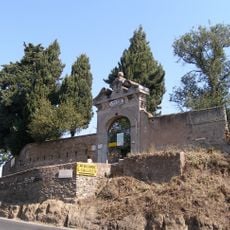
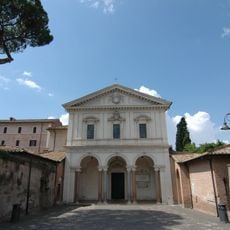
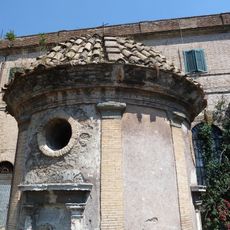
Catacombs of Domitilla, Underground burial complex along Via Ardeatina in Rome, Italy.

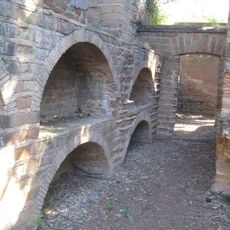
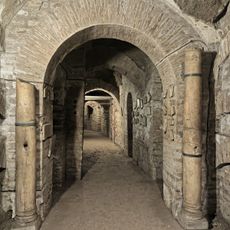
The Catacombs of Domitilla are an underground burial complex with roughly 17 kilometers of tunnels spanning four levels and containing thousands of burial chambers carved into tufa stone. The site displays a dense network of passages where narrow niches stack closely together and various rooms sit side by side for different burial purposes.

Flavia Domitilla, a member of the imperial Flavian family, provided these burial grounds for Christian use during the second century when burials within Rome were forbidden. The catacombs developed at a time when Christians needed a safe place to bury their dead, giving the site an important role in the early Christian community.

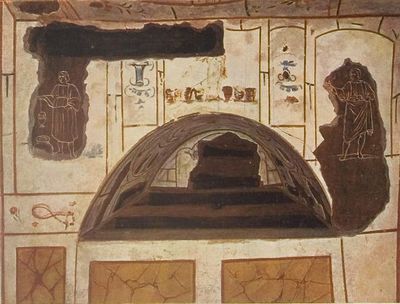
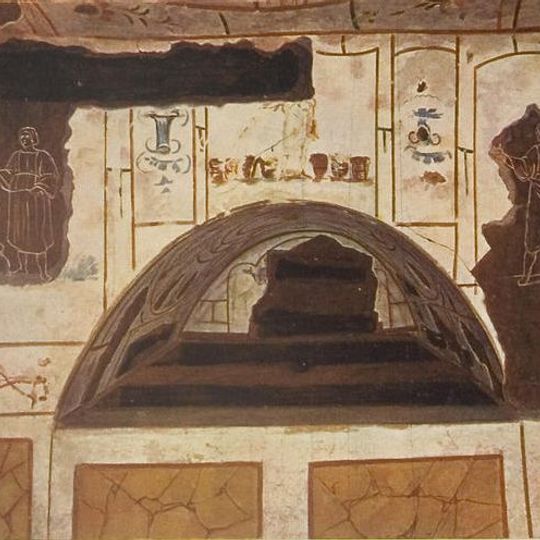
The walls display early Christian art through frescoes depicting biblical scenes, religious symbols like doves and fish, and inscriptions left by believers expressing their faith and hopes. These artworks show how people used the underground spaces as places of worship and remembrance for their community.

Access is provided by several bus lines, and guided tours are offered on most days with regular departure times. It is advisable to wear sturdy shoes and bring warm clothing, as the underground rooms are cool and the walkways are uneven.

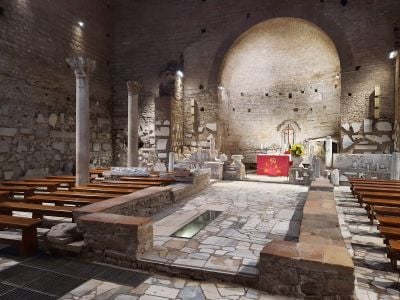
The underground basilica room holds the tombs of martyrs Nereus and Achilleus, identified through a fourth-century inscription by Pope Damasus. This inscription remains visible today and shows how the early Church honored these holy figures at this burial site.

Location: Rome

Part of: Catacombs of Rome

Website: http://domitilla.info/idx.htm?var1=docs/fr01.htm

GPS coordinates: 41.85891,12.50553

Latest update: December 6, 2025 16:03

Photos
Mysterious underground places worldwide

Underground locations provide insights into geological processes and human history. Natural caves display limestone formations, stalactites, and subterranean rivers formed over thousands of years. Artificial sites include Roman catacombs, medieval cellars, and mining tunnels that document economic and social developments. This collection features prehistoric burial chambers with wall paintings, extensive cave systems with lakes and passages, and historical mines for salt, copper, or coal. Visitors can explore archaeological findings, mineral formations, and technical installations from earlier periods. Temperatures remain constant throughout the year, and many sites offer guided tours through their underground chambers.

Undiscovered crypts and catacombs in Europe

Beneath the streets of Europe's cities lies an underground world of burial chambers and crypts that tell the story of how people honored their dead across centuries. These subterranean spaces range from simple rock-carved tombs to elaborate vaulted rooms, housing the remains of countless generations along with religious monuments, painted walls, and carved stone that reflect Roman, Egyptian, and Christian beliefs. Walk through these passages and you encounter the actual practices of death and faith that shaped European life from the 1st century through the 1800s. The frescoes on the walls, the mosaics underfoot, and the carefully arranged bones reveal how different cultures buried their dead, what they believed about the afterlife, and how they saw themselves in the world. Each crypt and catacomb serves as a record of its time and place. In Paris, workers moved millions of remains to former quarries when cemeteries overflowed, creating a vast underground network that solved a practical problem while becoming a monument to the dead. Vienna's imperial burial chambers held rulers for centuries, transforming tombs into statements of power and legacy. In Naples, Rome, and elsewhere, painted biblical scenes decorate the walls. In the Czech Republic and Poland, elaborate arrangements of bones form geometric designs and decorative patterns that speak to how death was both feared and organized into order. What makes these places remarkable is how they show us the daily reality of life and death in earlier times. Whether you see neat rows of sarcophagi, walls covered with carved inscriptions, or arrangements of bones transformed into art, each site tells you something about what mattered to the people who created it. These underground spaces preserve the beliefs, fears, and hopes of generations, making them windows into how communities lived and what they thought about mortality and the world beyond death.

Reviews

Visited this place? Tap the stars to rate it and share your experience / photos with the community! Try now! You can cancel it anytime.

« Catacombs of Domitilla - Underground burial complex along Via Ardeatina in Rome, Italy » is provided by Around Us (aroundus.com). Images and texts are derived from Wikimedia project under a Creative Commons license. You are allowed to copy, distribute, and modify copies of this page, under the conditions set by the license, as long as this note is clearly visible.

Discover hidden gems everywhere you go!

From secret cafés to breathtaking viewpoints, skip the crowded tourist spots and find places that match your style. Our app makes it easy with voice search, smart filtering, route optimization, and insider tips from travelers worldwide. Download now for the complete mobile experience.

Around Us App Screenshot

A unique approach to discovering new places

Le Figaro

All the places worth exploring

France Info

A tailor-made excursion in just a few clicks

20 Minutes