Acquedotto di Cortaccione, Roman aqueduct and archaeological site in Spoleto, Italy
The Cortaccione Aqueduct is a Roman water infrastructure system near Spoleto built with stone arches and channels. It carried water from distant mountain springs downhill to serve the ancient settlement below.
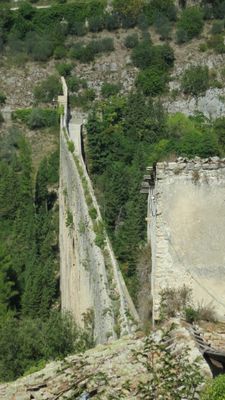
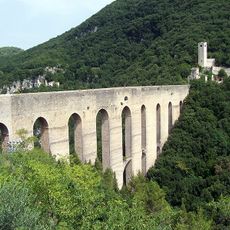
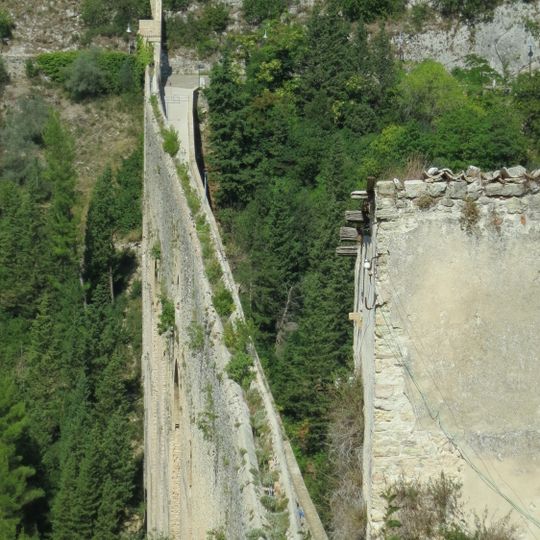
The first water supply of Spoleto drew on Roman drainage and catchment works east of the city, probably begun after it became a municipium in 90 BC. The aqueduct crossed the Tessino gorge on a bridge later replaced by the Ponte delle Torri. Between 1891 and 1893 the open channel was rebuilt as a pressure pipe, and the system remained Spoleto's main water source until the Argentina aqueduct opened in the early 1970s.
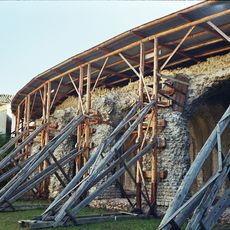
The covered channel on the Monteluco slope forms a wide, level path still walked today as the Giro dei Condotti, named after the conduits beneath its paving. The public distribution point, the Castellum Aquae, stood in Piazza Bernardino Campello, from where water branched through masonry and terracotta channels and small wells.
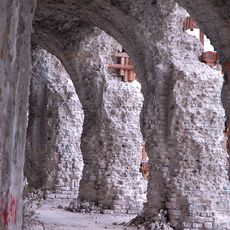
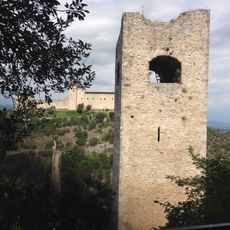
The remains of the structure are visible on site and give a sense of how it originally functioned. Visiting is easiest by taking a short walk that reveals the construction from different angles.
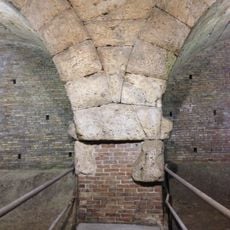
The system included underground tunnels, collection basins, and pipe networks that show how skillfully Romans moved water across long distances. These technical solutions were remarkably advanced for their era.
The community of curious travelers
AroundUs brings together thousands of curated places, local tips, and hidden gems, enriched daily by 94,670 contributors worldwide.