Palazzo Moroni, Baroque palace in Upper Bergamo, Italy
Palazzo Moroni is a Baroque palace in the upper part of Bergamo, with plain outer walls along a narrow street and richly decorated interiors featuring frescoes and painted ceilings throughout. The estate also includes garden terraces that visitors can explore alongside the art collections inside.
Francesco Moroni commissioned the palace after his marriage to Lucrezia Roncalli in 1631, on land bought from the Pesenti family along what was then called via Porta Penta. Battista della Giovanna built it over thirty years, from 1636 to 1666. In 1649 Gian Giacomo Barbelli was hired to fresco the interiors, following instructions from Donato Calvi, prior of the Sant'Agostino convent. A mid-19th-century renovation gave the building its present look; in 1878 the family bought and demolished Palazzo Marenzi opposite to open the first-floor views.
The main ballroom is painted with scenes from Torquato Tasso's Gerusalemme Liberata, giving the room a strong literary character. Other rooms display works by Giovanni Battista Moroni, a painter from the Bergamo area known for his portraits.
Visits are organized through the Fondazione di Palazzo Moroni, which offers guided tours of the interior and the gardens. Opening hours can change by season, so checking ahead before your visit is a good idea.
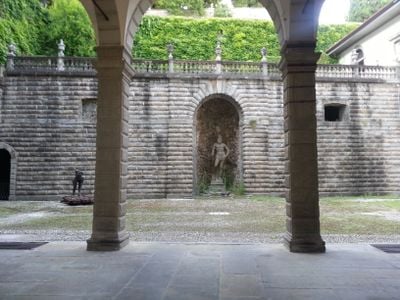
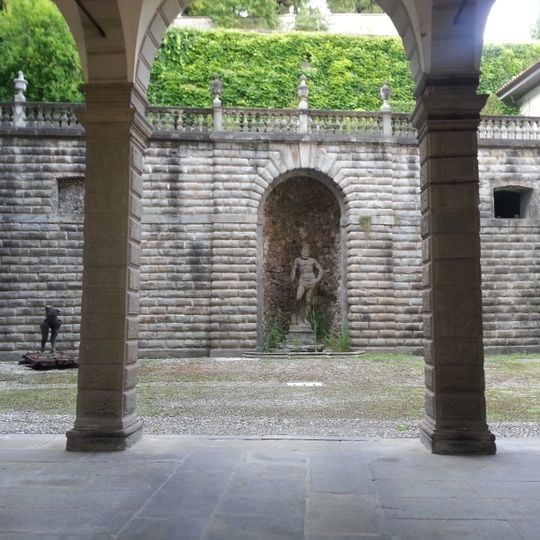
The courtyard wall, built of rough grey-brown stone and topped by a balustrade, holds a round-arched niche with a pale statue of Neptune; a small dark animal statue sits to its left. The whole arrangement is a 17th-century work by Lorenzo Redi, and the wall marks the edge of the park that climbs to the Sant'Eufemia hill.
The community of curious travelers
AroundUs brings together thousands of curated places, local tips, and hidden gems, enriched daily by 93,480 contributors worldwide.