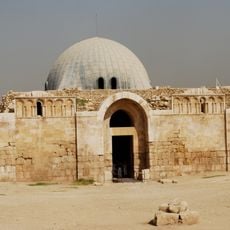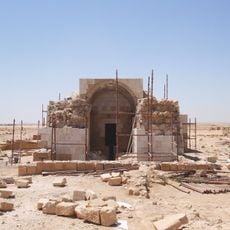
Qasr al Hallabat, Desert palace in Zarqa Governorate, Jordan
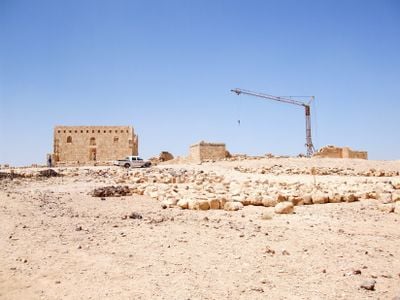
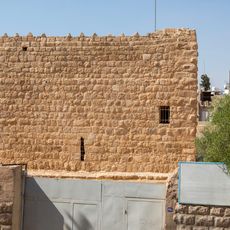
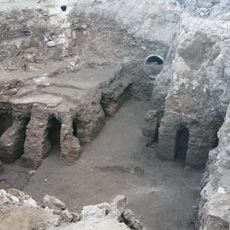
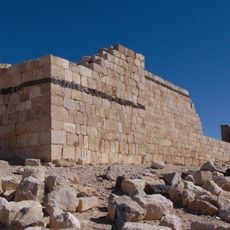
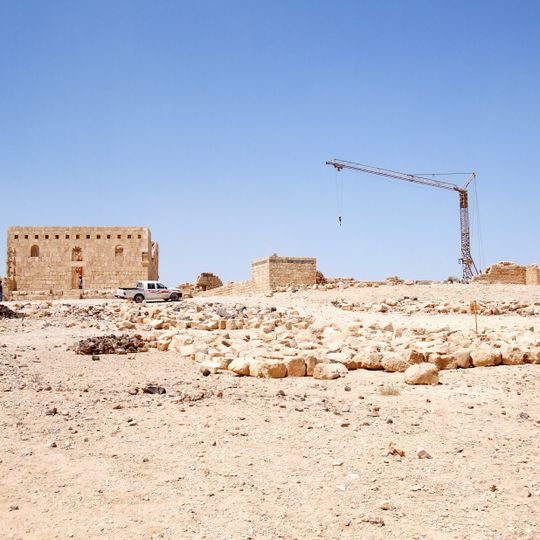
The rectangular floor plan measures approximately 145 by 131 feet (44 by 40 meters) and encloses a central courtyard surrounded by vaulted chambers. Black basalt forms the lower masonry sections while lighter limestone characterizes the upper portions. Painted wall surfaces and geometric mosaic floors decorate multiple rooms within the multistory construction.
Roman soldiers erected a castellum during the second century AD to secure the desert frontier. The Ghassanid allies of Byzantium utilized the location throughout the sixth century. Caliph Hisham ibn Abd al-Malik ordered the expansion between 720 and 740 AD into an extensive residence with baths, agricultural installations, and defensive towers.
The installation formed an important administrative outpost along the Roman frontier defense system and later served as a symbol of Umayyad caliphal authority. The preserved bathhouse with its mosaics demonstrates the social importance of public bathing rituals in the early medieval Near East. Religious structures within the compound reflect the transformation of the region during the Islamic expansion of the seventh century.
The excavation site lies 40 miles (64 kilometers) northeast of Amman along the highway toward the Saudi Arabian border. Visitors should bring sturdy footwear for uneven terrain. The nearby desert castles of Azraq and Amra lie along the same touring route. An early morning visit avoids the intense midday heat of the Jordanian desert.
Archaeologists discovered beneath the mosaic floors a concealed underground cistern system that collected rainwater from a catchment area of several square miles. The hydraulic technology enabled agricultural use in a region receiving less than 4 inches (100 millimeters) of annual rainfall. Stone channels still connect the main building with distant water reservoirs.
The community of curious travelers
AroundUs brings together thousands of curated places, local tips, and hidden gems, enriched daily by 90,738 contributors worldwide.