Niukawakami Shrine, Shinto shrine in Higashiyoshino, Nara Prefecture, Japan
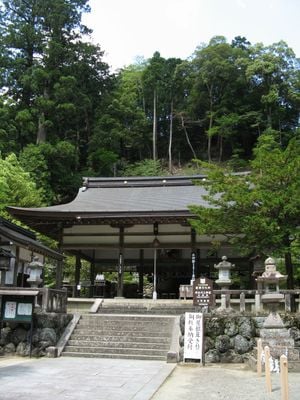
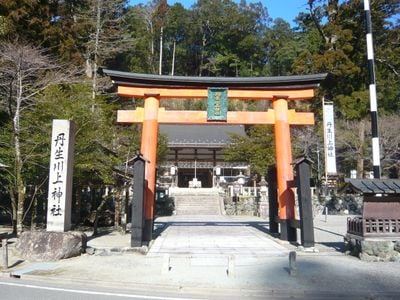
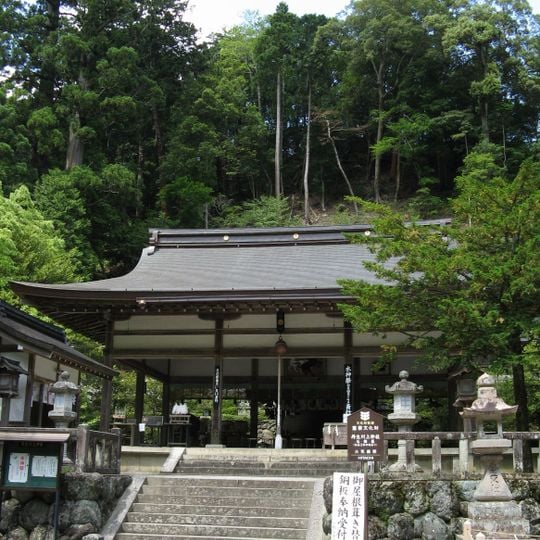
Niukawakami Shrine in Higashiyoshino is entered through a torii with bright orange-red pillars and a green plaque bearing gold characters. A stone pillar inscribed "丹生川上神社" stands to the left. Up a wide stone staircase, the wooden worship hall has a sweeping dark gray roof with gold ornaments along its ridge, an open facade between dark pillars, and a large round bell hanging from the ceiling.
According to shrine tradition, it was founded in 675 when the water deity Mizuhanome was enshrined on the south bank of the Mitarashi River, later moved to the present site. A 895 decree cites a divine oracle promising rain and the stopping of rain in return for worship in a deep mountain. From 763 until the Ōnin War, the court sent 96 offerings for rain-making and rain-stopping. It fell into decline and its location was forgotten after the Ōnin War; in 1915 Moriuchi Narayoshi identified it as the Engishiki shrine, and it was renamed Niukawakami Shrine in 1922.
The shrine was long called Amatsukami Myōjin and, from the Edo period, Arifushi Myōjin; the name Niukawakami derives from the place name Nyukawa, not a mountain deity. Its main deity is Mizuhanome no Kami, a water goddess, and rain prayers were offered here with black horses for rain and white horses for fair weather. The October Oguwa Matsuri, a drum-float festival, is counted among the three great festivals of Yamato.
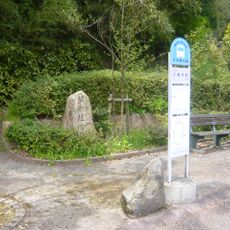
The shrine stands at 968 Oaza-Ogawa, Higashiyoshino, reachable by Nara Kotsu bus from Haibara Station to Higashiyoshino Village Office, then a community bus toward Shigo to the "Aritoshi" stop. The approach includes a wide stone staircase and a paved path; the precinct has stone steps between the halls. The main hall faces south, with the east and west halls flanking it and a covered corridor leading to the worship hall.
The shrine's name changed from "Arisugawa Myōjin" to "Niukawakami Shrine" in 1922, after scholar Moriguchi Narayoshi's 1915 study identified it as the shrine recorded in the Engishiki. The three shrines then shared one office until 1952, when they became independent.
The community of curious travelers
AroundUs brings together thousands of curated places, local tips, and hidden gems, enriched daily by 93,165 contributors worldwide.