Mount Hakone, Complex volcano in Kanagawa and Shizuoka prefectures, Japan
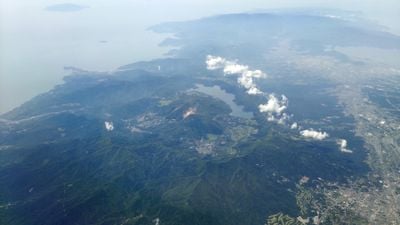
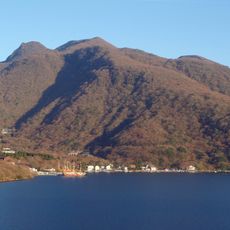
Mount Hakone is an active volcano in Kanagawa Prefecture that rises to 1438 meters (4718 feet) and spans several municipalities. The terrain includes two overlapping calderas with many lava domes and steam vents.
Two major eruptions around 180000 years ago and between 49000 and 60000 years ago shaped the present-day calderas. Later volcanic activity created several lava domes and the current landscape with its geothermal features.
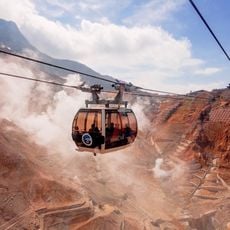
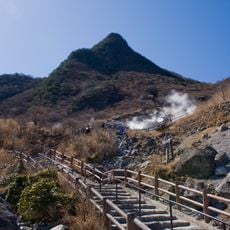
The mountain is known for its influence on hot spring culture and feeds the many bathing resorts in the surrounding area. Visitors often see steam clouds above the terrain, a sign of the deep geothermal activity beneath the surface.
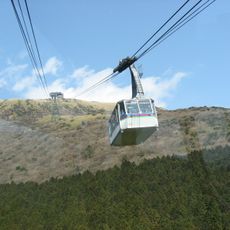
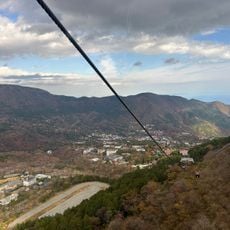
A cable car system connects Sounzan station to Togendai station with a stop at Owakudani. The weather can change quickly, so bring warm clothing and good footwear even in summer.
The 2015 phreatic activity at Owakudani raised the eruption alert level to 3 in June, closing the Owakudani Nature Study Path, a roughly 600 m loop, until safety structures were built. The same unrest led Hakone Town to issue an evacuation order for a 1 km radius around the vents.
The community of curious travelers
AroundUs brings together thousands of curated places, local tips, and hidden gems, enriched daily by 92,783 contributors worldwide.