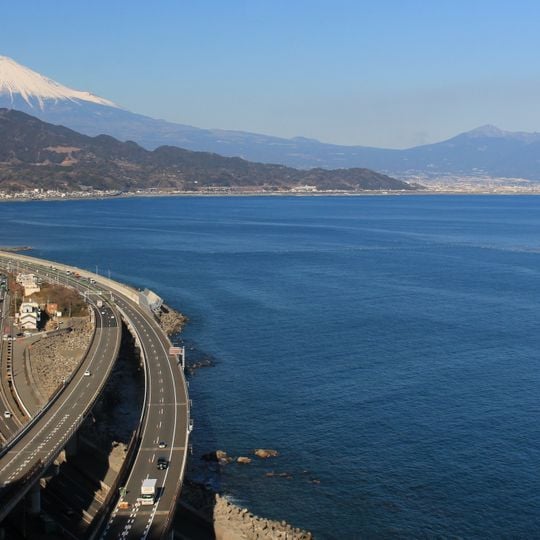
Suruga Bay, Pacific Ocean bay in Shizuoka Prefecture, Japan.
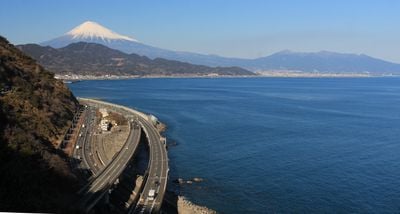
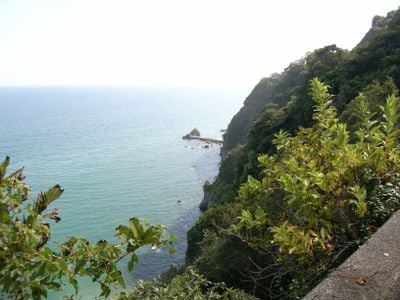
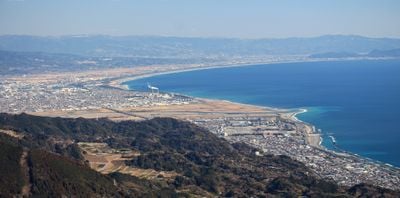
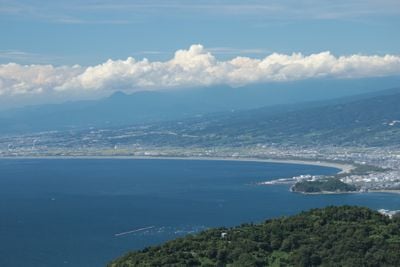
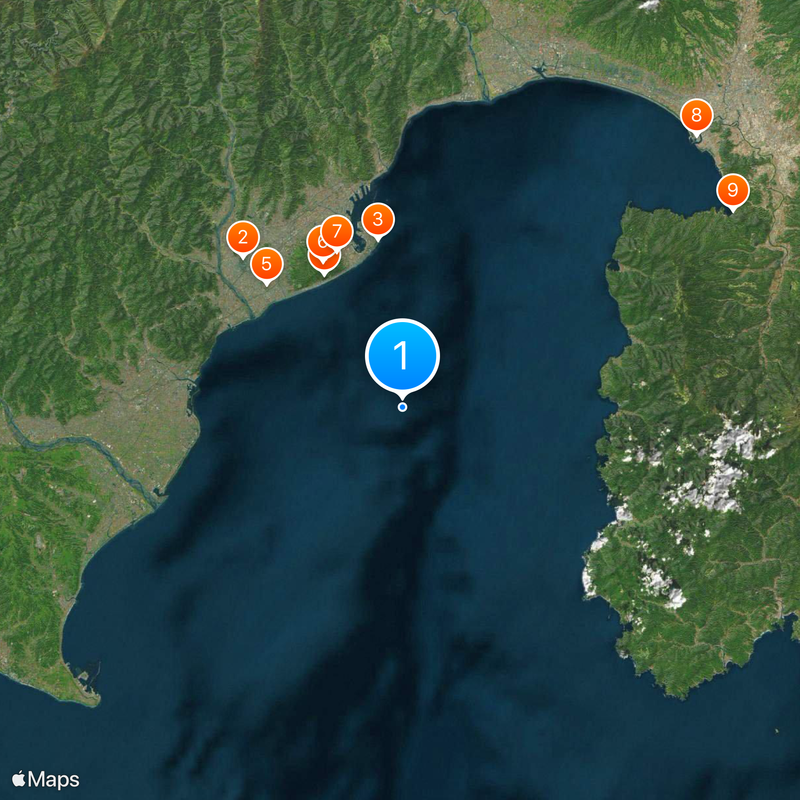
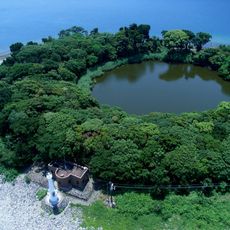
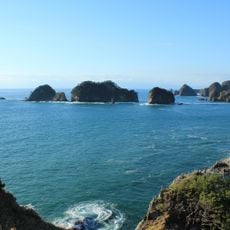
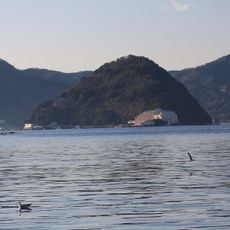
The bay is a deep ocean inlet on the southern coast of Honshu opening between the Izu Peninsula to the east and Cape Omaezaki to the west. Its shores range from shallow beaches in the west to rocky cliffs and steep slopes along the volcanic peninsula to the east.
Its geological formation began about 600,000 years ago as movements of the Philippine Sea Plate against the Eurasian Plate reshaped the ocean floor. These tectonic forces carved the deep depression and raised the Izu Peninsula at the same time.
Fishermen head out on small boats in the early morning hours using fine-mesh nets designed specifically for catching glass eels and tiny shrimp. These methods give the coastal towns around the bay their own identity and shape the rhythm of daily life in the harbors.
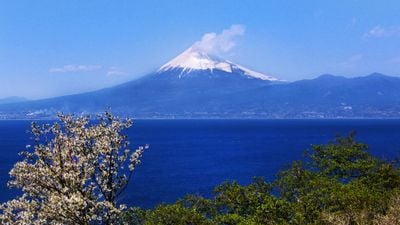
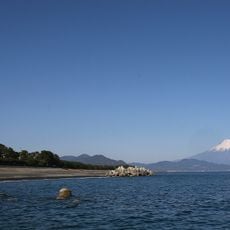
Several small harbors along the coast offer docking points for excursion boats and access to viewpoints from which you can overlook the water. The bay is best visited on clear days when Mount Fuji is visible and the view toward the open ocean remains unobstructed.
The seafloor drops to more than 2,500 meters (8,200 feet) at certain points and creates one of the deepest bays in Japanese coastal waters. Underwater springs on the bottom are fed by rainwater that has filtered through the rock of Mount Fuji.
The community of curious travelers
AroundUs brings together thousands of curated places, local tips, and hidden gems, enriched daily by 92,791 contributors worldwide.